ABUJA — As the smoke clears from a devastating “Easter Week of Blood” that left 32 dead across 12 communities, a haunting question is being asked from the pulpits of Abuja to the mass graves of Benue: Why is the world’s most powerful black military unable—or unwilling—to stop the systematic slaughter of Christian farmers in the Middle Belt?
While the official narrative often leans on “communal clashes” or “climate change,” the reality on the ground in April 2026 suggests a far more coordinated and sinister agenda. From the massacre of 17 people in Mbalom, Benue, to the church raids in Ariko, Kaduna, the “linguistic fingerprint” of the attackers points to a deliberate campaign of ethno-religious cleansing carried out by Fulani ethnic militias and their jihadist allies.
The Shadow of Foreign Influence: Iran, Hezbollah, and the Fawaz Brothers
The insecurity in Nigeria is no longer a purely domestic affair. Diplomatic tensions reached a boiling point this month as the Israeli Ambassador to Nigeria, Michael Freeman, explicitly accused Iran of sponsoring “extremist activities” and “spreading terrorism” across the country. According to these high-level allegations, Tehran is using local proxies to radicalize and fund militant networks, turning the Middle Belt into a new frontier for global jihad.
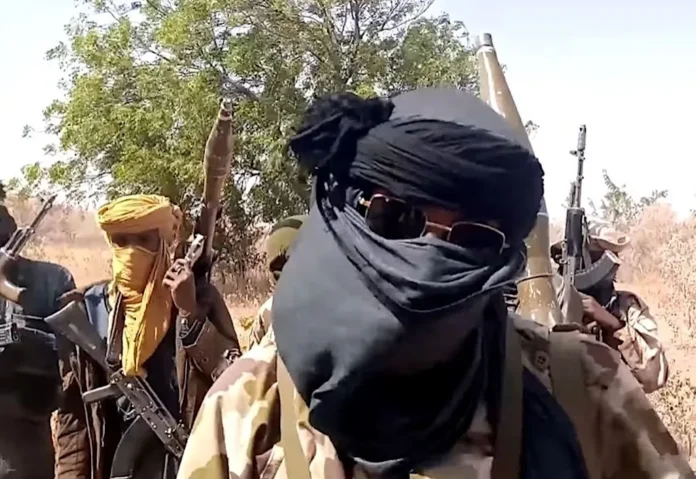
Adding to this complex web are long-standing concerns regarding the Fawaz brothers—Mustapha, Abbas, and others—who have historically been linked to Hezbollah’s operations in West Africa. In the past, Nigerian security services uncovered a massive arms cache in Kano belonging to a cell allegedly managed by Mustapha Fawaz. While the brothers have faced various legal battles, intelligence experts warn that the “Hezbollah model” of creating sleeper cells and providing logistical support to local militants remains a potent threat. The fear in 2026 is that these foreign-linked networks are providing the sophisticated weaponry—including Rocket-Propelled Grenades (RPGs)—now being used by bandits to overrun police stations in Borno and villages in Plateau.
A Military Under Fire: The “Double Standard” Allegation
The perceived inability of the Nigerian military to eradicate these groups has led to an unprecedented crisis of confidence. Critics argue that the military, which is seen by many as dominated by Northern Muslim leadership, has adopted a “look the other way” policy toward Fulani militants.
“Whenever a few Igbo boys get angry, they send the Air Force, Navy, and armored tanks to the East,” Pastor Sarah Omakwu of the Family Worship Centre declared in a viral sermon. “But we see Fulani boys stand and speak on the internet, they say anything, do anything, and nothing moves. Instructions are given for nobody to move.”
This sentiment is echoed by the families of the 31 worshippers abducted in Ariko, Kaduna, who noted that while the Army eventually rescued them, the troops were “conveniently absent” when the terrorists were selecting victims and shooting people inside the church. The contrast between the “crush” policy used against IPOB in the South-East and the “rehabilitation” policy for “repentant” Boko Haram terrorists in the North has convinced many that the military’s failure is a matter of political will, not operational capacity.
The Proliferation of Terror
Today, the Middle Belt faces a three-pronged threat:
- Fulani Militias: Carrying out “hit-and-run” raids on Christian agrarian communities.
- ISWAP & Boko Haram: Expanding from the North-East into the North-Central to ignite a full-scale religious war.
- Lakurawa: A new Al-Qaeda-linked group in the North-West that is currently moving southward.
As the 2027 election cycle begins to loom, the ₦3.3 trillion “Renewed Hope” plans mean little to a population “pushed to the wall.” For the survivors of the Easter massacres, the enemy isn’t just the gunman in the forest; it is the silence from the military headquarters in Abuja and the suspected foreign agents fueling the fire from the shadows.