
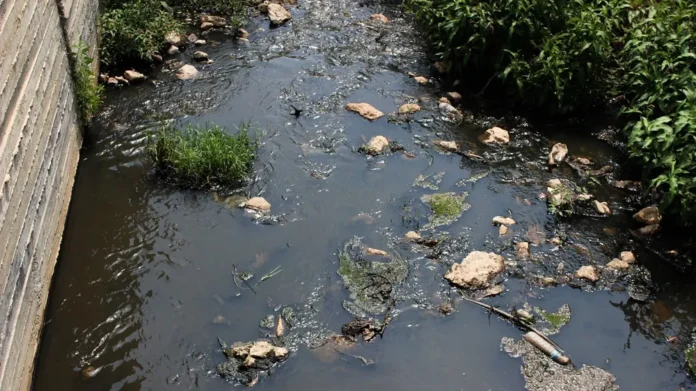
BNEI BRAK, Israel — A major sewage and water artery has ruptured in the city of Bnei Brak after being struck by debris from an intercepted Iranian missile, sending floods of waste through the streets of the ultra-Orthodox district.
The incident occurred during a massive aerial salvo in the early hours of Thursday, April 2, 2026. Eyewitness footage captured the moment a fragment from an intercepted cluster munition slammed into the pavement, instantly triggering a geyser of water and sewage that submerged nearby vehicles and flooded residential ground floors.
The “Infrastructure War” Intensifies
The strike on Bnei Brak’s plumbing is being viewed as part of a wider, more calculated “war on essentials.” While Israel’s Iron Dome and Arrow systems intercepted the bulk of the Iranian barrage, the falling shrapnel has proven lethal to the country’s aging civilian infrastructure.
Beyond the mess in Bnei Brak, this latest wave of strikes has targeted:
- Chemical Plants: A hit on the ADAMA pesticides plant in Beersheba.
- Energy Hubs: Structural damage to oil refineries in Haifa.
- Residential Blocks: Partial collapses in Tel Aviv and Givatayim caused by falling debris.
Casualties and Chaos
Emergency services in Bnei Brak reported that at least five people were treated for minor injuries caused by the blast and falling shrapnel. However, the bigger challenge remains the environmental and health hazard posed by the burst sewer lines.
“The smell is unbearable, and the water is rising,” one resident told local reporters as municipal workers struggled to shut off main valves amidst ongoing rocket sirens. Repair efforts have been repeatedly stalled as workers are forced into bomb shelters every few minutes.
Retaliatory Sludge
The chaos in Israel is being mirrored in Tehran, where Israeli and U.S. retaliatory strikes have reportedly hit water treatment facilities, causing similar flooding in parts of the Iranian capital. Analysts suggest that both nations have moved past targeting purely military sites, choosing instead to make life unlivable for the civilian populations by disabling water, power, and waste systems.
As of Thursday morning, Bnei Brak remains under a partial health advisory, with residents warned to avoid contact with the floodwaters until the “sludge” can be cleared and the pipes repaired.