
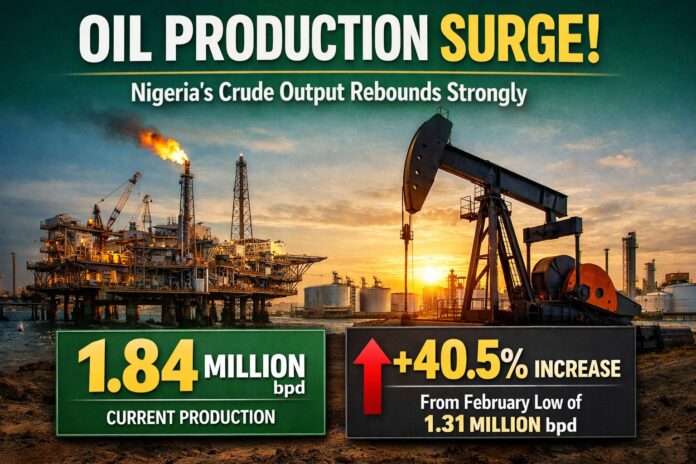

ABUJA — Nigeria’s crude oil production has recorded a massive rebound, hitting 1.84 million barrels per day (bpd) this week. This represents a staggering 40.5% increase from the three-year lows of 1.31 million bpd recorded just weeks ago in February.
The Nigerian Upstream Petroleum Regulatory Commission (NUPRC) confirmed the recovery during a high-level briefing at the Ministry of Finance on Thursday. Officials attributed the previous slump to “unfortunate incidents” at key export terminals and essential maintenance, which have now been resolved. The current output finally aligns with the 2026 budget benchmark, providing a much-needed boost to national revenue as global Brent crude prices hover around $109 per barrel.
“Paper Success vs. Empty Stomachs” — Nigerians Blast Tinubu Admin
Despite the celebratory tone from government officials, the Nigerian masses have reacted with deep bitterness and condemnation. On the streets and across social media, the consensus is that these “paper successes” do nothing to alleviate the crushing inflation and high fuel prices choking the average citizen. Outraged Nigerians are questioning why a surge in oil production has not translated into cheaper petrol or a stable naira under the President Bola Tinubu administration.
“They are counting barrels while we are counting our losses,” one trader in Abuja lamented. “Tinubu’s government is more interested in its 2027 ‘coronation’ and the ‘transactional politics’ of aides like Daniel Bwala than in making life affordable. This surge only benefits the elites while the masses remain in agony.”
Systemic Failure and Call for International Oversight
The public outcry has highlighted a total lack of trust in the current leadership. Many citizens have pointed to the hypocrisy of a government that celebrates oil revenue while failing to secure farming communities in Plateau, Nasarawa, and Kaduna. The memory of the “fake” and “embarrassing” presidential visit to Jos remains a sore point for many who feel the administration’s priorities are entirely misplaced.
In light of this, a massive wave of support has emerged for the involvement of U.S.-based policy firms to brief the Trump administration and Congress. Nigerians are openly expressing happiness and hope that international pressure will “reengineer” the country’s broken systems. The eager expectation is that the United States will intervene to ensure a fair and transparent 2027 election, protecting the democratic process from the perceived manipulation and oppression of the current government.






