
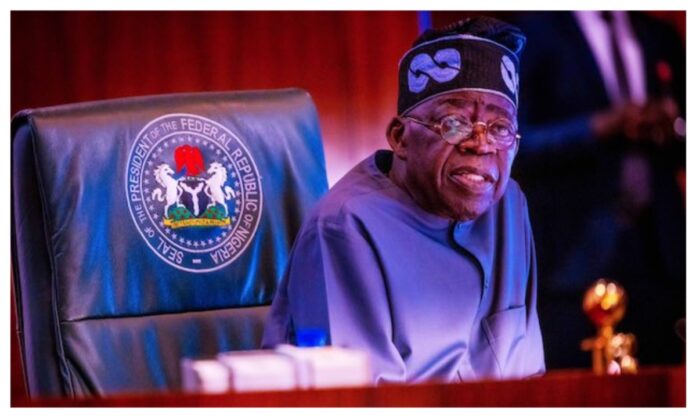

ABUJA — President Bola Tinubu’s formal tribute to the soldiers killed in the Benisheikh ambush has ignited a firestorm of criticism, with many Nigerians describing the Presidency’s stance as a “delusional” attempt to downplay a major security failure.
While the State House labeled the ISWAP attack a “sign of desperation,” the reaction from citizens at home and in the diaspora has been one of deep-seated anger and condemnation.
Domestic Backlash: “Where was the Air Force?”
Within hours of the President’s statement, social media was flooded with pointed critiques from Nigerians who feel the administration is out of touch with the reality on the front lines.
- The Air Force Absence: The most consistent criticism centers on the President’s claim of “sustained land and air offensives.” Critics are asking how a Brigade Headquarters could be under siege for several hours without a single jet intervening, especially after the military’s high-speed performance in Benin just months ago.
- Insensitive Rhetoric: Many have labeled the President’s call for the media to “desist from celebrating” attacks as a “gag order” intended to hide government incompetence. Citizens pointed out the irony of Tinubu—who once called similar attacks under Goodluck Jonathan “concrete proof that Nigeria has no government”—now asking for silence while his own generals are being killed.
- Equipment Scandals: The President’s promise to “provide more equipment” was met with mockery. “You can’t fight terrorists with N300 million wristwatches and Renewed Hope buses,” one viral post noted, highlighting the contrast between political luxury and the reports of soldiers in Pulka running out of ammunition.
Diaspora Condemnation: “A Failing State”
The Nigerian diaspora has added a global dimension to the condemnation, with several groups in Europe and the Americas issuing statements that describe the current government as “complicit or hopelessly incompetent.”
- The US Security Alert: Nigerians in the diaspora have pointed to the U.S. Embassy’s closure in Abuja as the ultimate “vote of no confidence.” They argue that the evacuation of American staff is a clear signal that the world no longer trusts Tinubu’s “Renewed Hope” security promises.
- Strategic Failure: Diaspora organizations, including the Nigerian Diaspora Security Forum, have called for an immediate independent audit of military spending. They argue that the loss of a second Brigadier General in five months suggests a systemic rot that cannot be fixed by press releases.
- Call for Resignations: Some diaspora voices have gone as far as calling for the resignation of the Minister of Defence and the Chief of Air Staff, arguing that their “selective superpowers”—rescuing foreign neighbors while ignoring local massacres—is a betrayal of their constitutional oath.
Political Fallout
The opposition has not remained silent. Peter Obi described the administration as acting like “Nero,” fiddling with 2027 political schemes while the country burns. At the same time, the ADC has slammed the President’s perceived “distance” from the suffering, noting that symbolic statements from Abuja are no longer enough to comfort families who are receiving coffins instead of security.
As of Friday morning, the mood in Nigeria is one of mourning mixed with a dangerous level of defiance, as the gap between the Presidency’s “sign of desperation” narrative and the public’s “national failure” reality continues to widen.






