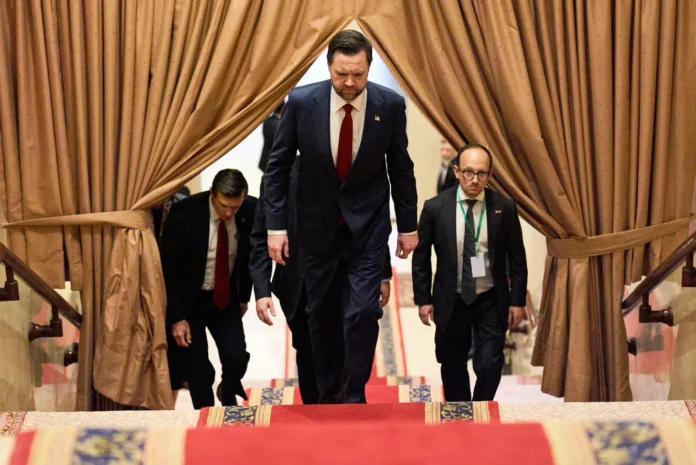
ISLAMABAD — Hopes for a diplomatic breakthrough have been dashed as U.S. Vice President JD Vance confirmed that high-stakes negotiations with Iran ended today without a formal agreement. Speaking to reporters before departing from Pakistan, Vance made it clear that the United States is prepared to walk away from the table, leaving the ball in Tehran’s court.
“We will go back to the United States having not reached an agreement,” Vance stated bluntly. He added a sharp warning, noting that the failure to secure a deal is “bad news for Iran much more than bad news for the USA.” The statement suggests that the Biden-Trump transition administration is prepared to revert to a “maximum pressure” strategy if Iran continues to resist U.S. demands regarding the Strait of Hormuz and regional stability.
The collapse of the Islamabad talks follows a week of intense military and diplomatic friction. Tensions were already high after reports surfaced of a U.S. naval retreat in the Strait of Hormuz and intelligence indicating that China is preparing to ship advanced MANPADS to Iranian forces. By leaving without a signature, Vance has signaled that the U.S. will not accept a “halfway” deal that doesn’t address these security concerns.
For Iran, the lack of an agreement means a continuation of the crippling blockade and the looming threat of expanded military action. While the U.S. delegation prepares for its return flight, regional analysts warn that the absence of a ceasefire framework could lead to an immediate escalation of hostilities in the Persian Gulf.
The “bad news” Vance alluded to likely refers to a fresh wave of secondary sanctions and a potential increase in U.S. naval assets in the region to force the reopening of global shipping lanes. As the Vice President heads back to Washington, the Middle East remains on a knife-edge, waiting to see if this diplomatic failure triggers a new round of direct kinetic conflict.