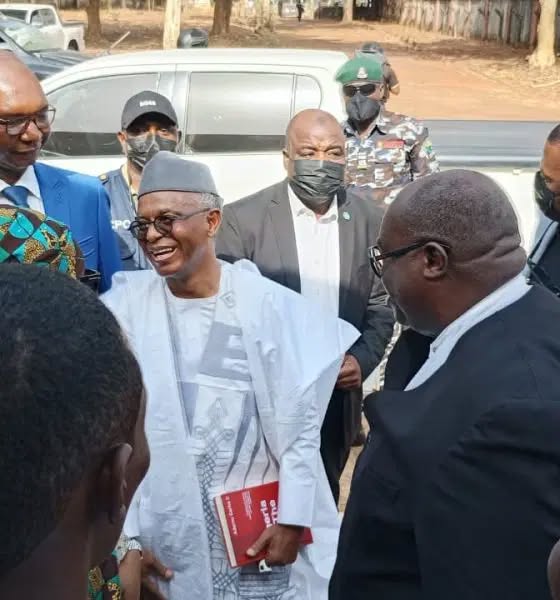
KADUNA, Nigeria — In a scene heavy with irony and political maneuvering, former Kaduna State Governor Nasir El-Rufai appeared before the Kaduna State High Court on Monday for the resumption of his corruption trial, even as he appeared more preoccupied with his political future than his legal defense.
The trial, spearheaded by the Independent Corrupt Practices and Other Related Offences Commission (ICPC), centers on allegations of abuse of office and fraud. Yet, the man who once wielded absolute power over Kaduna seemed less concerned with the gravity of the courtroom than with the upcoming National Convention of the African Democratic Congress (ADC).
Before the gavel even fell, El-Rufai was overheard discussing the Tuesday convention—a move critics view as a calculated pivot to remain relevant as his legal troubles mount. While his legal team prepares to battle a separate 10-count charge involving the alleged laundering of over ₦579 million and $1.1 million, El-Rufai continues to frame the proceedings as a political witch hunt.
However, the mounting evidence presented by the ICPC paints a darker picture of his tenure, suggesting a legacy defined more by undue advantage and financial impropriety than the administrative reform he once touted. As the court prepares to rule on his bail application in the federal case tomorrow, the former governor appears to be playing a high-stakes game: attempting to secure a new political platform while the foundations of his old one crumble under judicial scrutiny.
For a public weary of “politically motivated” excuses, the sight of a former leader juggling court dates with convention schedules serves as a stark reminder of the persistent entanglement of power and accountability in Nigeria.