
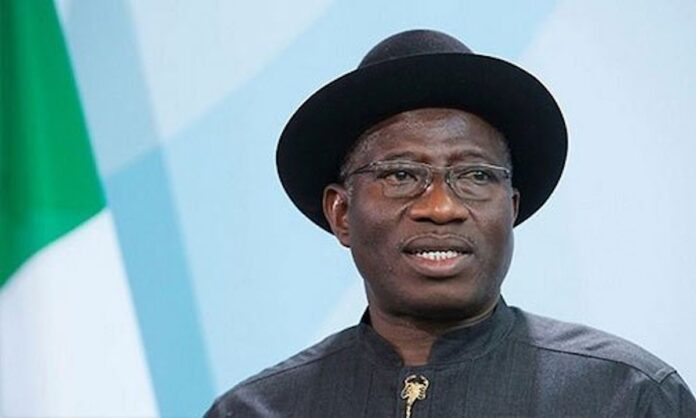

ABUJA, Nigeria – Former President Goodluck Jonathan has taken a swipe at Nigeria’s legal system, calling for the National Assembly to strip the Supreme Court of its role in governorship election appeals.
Speaking in Abuja on Wednesday at the 70th birthday of Senator Gbenga Daniel, Jonathan argued that the current three-tier litigation process is a “waste of time” that leaves the will of the voters in limbo for far too long.
The “One-Stop Shop” Proposal
Jonathan’s solution? A dedicated Constitutional Court. He proposed that Nigeria adopt the model used in many Francophone countries, where a single, specialized court handles all election disputes in one phase, bypassing the endless cycle of tribunals, Appeal Courts, and the Supreme Court.
“We need to create a Constitutional Court to handle election matters,” Jonathan stated. “If we must keep the Supreme Court involved, then let’s scrap the lower tribunals and start and end the case at the apex level.”
The “Red Ink” Ridicule
The former president didn’t hold back on the “technicalities” that judges often use to overturn elections. He recalled a bizarre case from the 2011 cycle where a candidate was sacked simply because voters used the “wrong color” of ink.
“Imagine unseating someone because they used black or green ink instead of red,” Jonathan remarked, using the anecdote to highlight how the current framework prioritizes petty rules over the actual votes cast by Nigerians.
“Referees Who Look the Other Way”
Using a football analogy, Jonathan reminded the judiciary that they are the referees of democracy. He warned that when judges ignore foul play or focus on technicalities, they encourage politicians to “break legs” and “score with their hands” to win at all costs.
National Assembly Response
The call for reform comes at a critical time as the 2026 Electoral Act begins its rollout. While some lawmakers have praised Jonathan’s “common sense” approach, others in the legal profession worry that a Constitutional Court might just be another layer of bureaucracy in an already slow system.
As the 2027 “Real Politics” season approaches, Jonathan’s proposal has reignited the debate: Should the courts decide winners, or should the voters?