
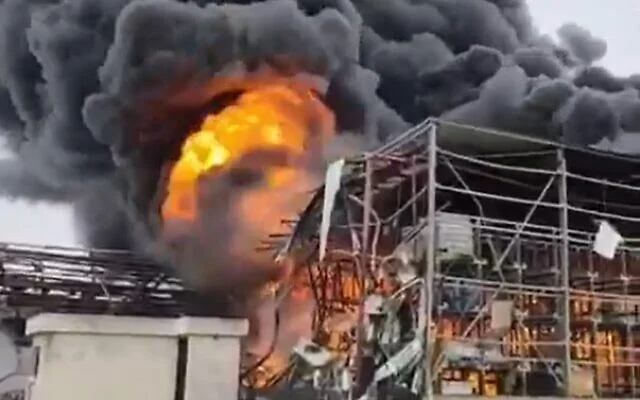
BEERSHEBA — Fears of a major environmental and public health disaster have gripped southern Israel as Iranian missile strikes continue to target the Ramat Hovav petrochemical complex, the nation’s primary hub for hazardous materials.
As of Tuesday morning, April 7, 2026, emergency hazmat teams remain on high alert following a series of direct hits on the industrial zone over the past week. The facility, also known as Neot Hovav, houses Israel’s largest concentration of chemical manufacturing and toxic waste management plants, making it a high-stakes target in the ongoing “energy war” between Tehran and the U.S.-Israeli coalition.
The “Toxic” Siege
The complex has been struck three times in the last nine days. A devastating hit on the Adama Makhteshim plant on March 29 initially sparked a massive chemical fire, forcing thousands of residents in the Beersheba area to seal their windows and shut off air conditioning to avoid potential airborne toxins.
While the most recent strike on Sunday, April 5, hit near a toxic waste dump rather than a primary storage tank, Fire and Rescue services warned that the structural integrity of several hazardous material bunkers has been compromised. “We are one lucky shot away from a regional environmental catastrophe,” noted one emergency responder on the ground.
Energy War: Infrastructure Under Fire
The strikes on Ramat Hovav are a direct retaliation for the systematic destruction of Iran’s own petrochemical industry. Israeli airstrikes have reportedly knocked out 85% of Iran’s export capacity, with the massive Asaluyeh and Mahshahr complexes currently in ruins.
The escalation has now moved beyond the two primary combatants. Iran has extended its reach to target power and water desalination plants in Kuwait, the UAE, and Bahrain, claiming these nations are “hosting” the American assets used to bomb Iranian soil.
The Tuesday Deadline
The situation has reached a critical breaking point as the clock ticks toward U.S. President Donald Trump’s 8:00 P.M. ET deadline tonight. Trump has warned of “hell” and direct strikes on Iranian power plants and bridges if the Strait of Hormuz—the world’s most vital oil artery—is not fully reopened.
With global oil prices pushing toward $120 per barrel and the threat of chemical leaks hanging over southern Israel, the “energy war” has moved from a military conflict to a direct threat to civilian survival across the Middle East.