
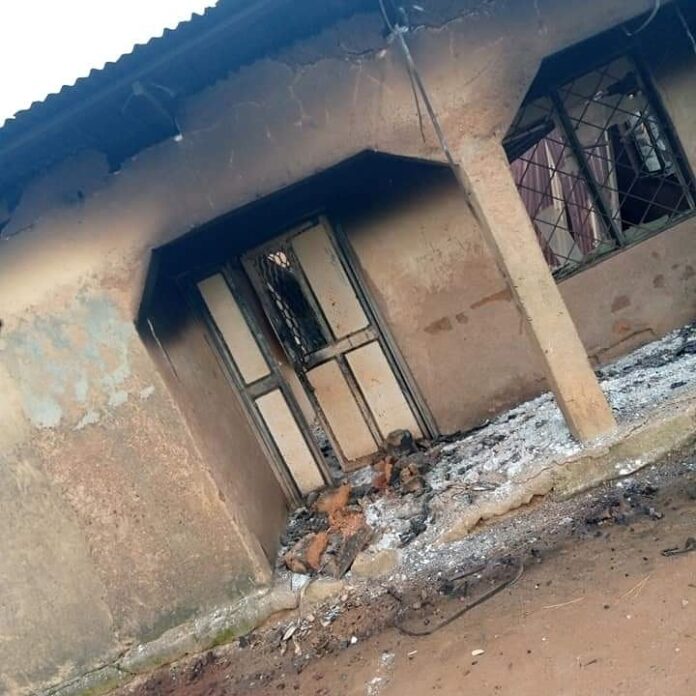

MAKURDI — In what has become a grim and predictable tradition, suspected Fulani herdsmen have once again turned Benue into a killing field, slaughtering at least 17 people in Mbalom on Easter Sunday while security forces were apparently nowhere to be found.
The Gwer East community, which is still haunted by the 2018 massacre of its priests, spent this Easter digging graves instead of celebrating. Gunmen reportedly stormed the agrarian settlement in broad daylight, opening fire on families and systematically torching homes and farm crops. While the blood was still fresh on the ground, the official response followed the usual script: a “strong condemnation” from the Governor’s office and a few bags of relief rice.
The “Security Alert” That Went Nowhere
What makes this latest “Fulani attack” even more galling for residents is the report that authorities were tipped off hours before the first shot was fired. Intelligence allegedly flagged about 50 armed herders moving from Nyiti toward Mbalom, yet the much-vaunted “Operation Whirl Stroke” failed to intercept them.
“We are tired of being sitting ducks for these killers,” one resident remarked as the bodies of neighbors like Zawua Timothy and Binta Aondoakaa were recovered. “The government is very fast at sending press releases and ₦2 million for burials, but they are never fast enough to stop the bullets.”
Governor Alia’s “Barbaric” Broken Record
Governor Hyacinth Alia has described the act as “barbaric”—a word Benue residents have heard so often it has lost its meaning. While the Governor has directed security agencies to “track down” the attackers who retreated toward Gwer West, locals point out that these “pursuits” rarely result in actual arrests or justice for the dead.
To manage the fallout, the state government has dispatched relief materials to the newly displaced survivors. However, the mood in Mbalom is one of pure rage. For a community that has lost 17 more of its own on a holy day, a ₦2 million cash grant feels less like help and more like a payout for silence.
A Pattern of Abandonment
As of Monday, April 6, 2026, the perpetrators remain at large, likely emboldened by the lack of any real consequence. The “Fulani attack Benue again” headline is becoming a permanent fixture of the Nigerian news cycle, proving that for all the talk of “strenthened security,” the rural farmer remains the most expendable person in the republic.






