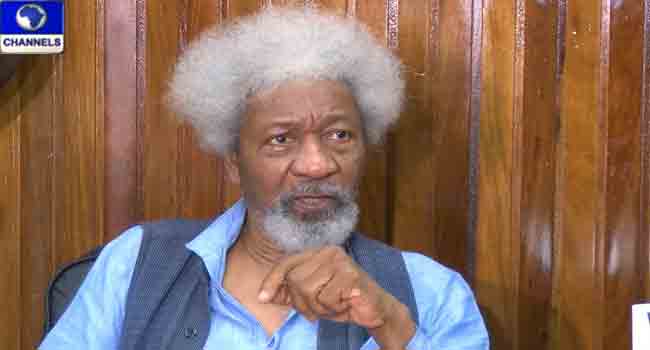
ABUJA — Three years into the administration of President Bola Ahmed Tinubu, a growing chorus of critics is calling out Nobel Laureate Professor Wole Soyinka, accusing the literary giant of “intellectual hypocrisy” for failing to deliver the stinging performance assessment he once famously reserved for past leaders.
The man known as “Kongi”—a fierce social critic who historically spared no one—is under fire for a protective silence that stands in stark contrast to his scorched-earth approach to former President Goodluck Jonathan. Despite an economy in freefall and a security crisis pushing Nigerians to the wall, Soyinka’s promised “Asiwaju scorecard” remains conspicuously missing.
The Jonathan Standard vs. The Tinubu Silence
The primary source of public anger is the memory of Soyinka’s relentless activism during the Jonathan era. In 2014, the Nobel Laureate famously likened Goodluck Jonathan to the biblical King Nebuchadnezzar, citing “impunity” and a police siege on the National Assembly. He was a constant fixture in the media, delivering stinging broadsides against the government’s handling of the Chibok girls’ abduction and the fuel subsidy protests of 2012.
Today, however, as inflation hits record peaks and similar subsidy removals devastate Nigerian households, that fire appears to have been extinguished. Critics argue that if the “Nebuchadnezzar” standard were applied to current policies, Soyinka’s silence would be impossible to justify. Instead, the Professor has accepted accolades from the current administration, a move many contrast with his high-profile rejection of a National Honour from Jonathan on “democratic principles.”
“I Haven’t Swallowed an Alarm Clock”
When confronted with the delay in his assessment, Soyinka’s response has been uncharacteristically defensive. In late 2024 and again in early 2025, he told reporters that he would not be bullied into following a “public timetable.”
“I have not swallowed an alarm clock,” Soyinka remarked, dismissing the one-year deadline he had initially set for himself in December 2023. This refusal to hold the Tinubu administration to the same rigorous timeline he applied to Jonathan or Olusegun Obasanjo has led many to conclude that the Professor is shielding a political ally while the masses suffer.
Selective Activism and a Fading Legacy
While Soyinka has made minor critiques—such as describing the recent emergency rule in Rivers State as “excessive”—these interventions are being dismissed by the youth-led opposition as “tame and lame.” For many, the “linguistic fingerprint” of a true social crusader is missing in his current rhetoric.
“You cannot be a lion against Jonathan and a house cat for Tinubu,” says one Abuja-based political analyst. “When the people are suffering the same governance failures Soyinka once fought against, his silence becomes a form of complicity.”
As the 2027 election cycle begins to loom and grassroots movements like the ADC coalition gain momentum, the pressure on the Nobel Laureate to break his silence is reaching a fever pitch. Nigeria, many argue, deserves the “Kongi” of old—not a silent observer of the nation’s hardship.