
ABUJA — While the federal government spent the Easter holidays touting “Renewed Hope” and ₦3.3 trillion power sector interventions, rural Nigeria was transformed into a killing field. From the agrarian heartlands of Benue to the worship centres of Southern Kaduna, a coordinated wave of terror across 12 distinct communities has left at least 32 people dead and dozens of families shattered in the bloodiest holiday period in recent memory.
The violence, spanning from March 30 to the early hours of April 6, 2026, targeted the very foundations of community life: churches, police stations, and farming settlements. Despite a dramatic forest rescue of 31 hostages by the Nigerian Army, the sheer scale of the carnage has left citizens questioning why the nation’s security architecture remains persistently reactive rather than preventive.
The Sunday Massacres: Benue and Kaduna
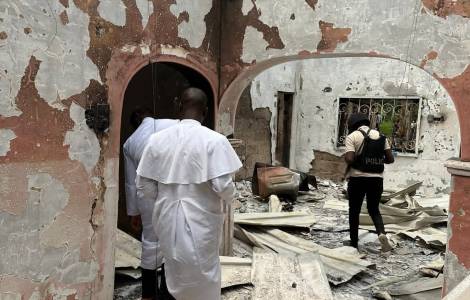
The most devastating blow fell on Easter Sunday, April 5. In Benue State, suspected Fulani herdsmen stormed three communities in Gwer East: Mbalom, Mbatsada, and Agana. The attackers, reportedly numbering over 50 and dressed in black overalls, opened fire on residents returning from church services. By the time the smoke cleared, 17 people lay dead, and barns filled with newly harvested crops were reduced to ashes. For Mbalom, this was a cruel repeat of the 2018 massacre that claimed the lives of two Catholic priests.
Simultaneously, in the Ariko village of Kaduna State, terrorists laid siege to the First ECWA Church and St. Augustine Catholic Church. The gunmen surrounded the buildings mid-service, killing seven worshippers on the spot and marching 31 others into the bush. In a rare silver lining, the Nigerian Army’s swift pursuit resulted in the rescue of all 31 hostages, though the remains of five victims killed during the initial raid were later recovered at the scene.
The Siege on Authority: Borno and Katsina
The terror was not limited to civilians. On Saturday, April 4, Boko Haram and ISWAP militants launched a sophisticated assault on the Nganzai Divisional Police Headquarters and a Damasak IDP camp in Borno State. Using Rocket-Propelled Grenades (RPGs), the insurgents killed four police officers and one local hunter.
In Katsina State, the home state of former President Buhari, the violence hit close to home for the ruling party. An attack in the Tangani and Sayaya communities resulted in the death of a policeman. This comes just days after Governor Dikko Radda publicly urged his citizens to “vote out” any leader who fails to protect them, a comment that has reportedly caused significant friction within the Presidency.
Ransom Executions and Revenge Raids
As the week drew to a close, the “business” of kidnapping turned lethal. In Janjala, Kagarko LGA, bandits executed two female hostages after their families failed to meet a ₦14 million ransom demand. The women were part of a group of 14 abducted on March 1; their deaths were reportedly “punishment” for the families raising only ₦3 million through the sale of their farmlands.
By the early hours of Monday, April 6, the violence shifted to Zamfara and Plateau. In Kungurki village, Kaura Namoda, a “revenge raid” sparked by the beheading of a bandit commander by local vigilantes led to a night-long gunbattle. In Plateau State’s Heipang district, two community members in Pwomol were shot dead at midnight while keeping watch. However, in a significant development, residents and security forces managed to apprehend one of the attackers, a Fulani man identified as Suleiman, who is now in military custody at Sector 4.
A Nation Pushed to the Wall
The final tally of the Easter week—12 communities attacked and 32 lives lost—is a grim indictment of the status quo. Critics and religious leaders, including Sheikh Sunusi Khalil, have slammed the administration for focusing on 2027 campaign maneuvers while the rural population is being “pushed to the wall.”
As the smoke settles over the ruins of Mbalom and Ariko, the 32 lives lost serve as a stark reminder that in the trenches of Nigeria, security remains an elusive concept. For the families currently burying their dead, the ₦3.3 trillion power plans and political “Plan B” strategies mean nothing compared to a military that shows up before the bullets start flying.