
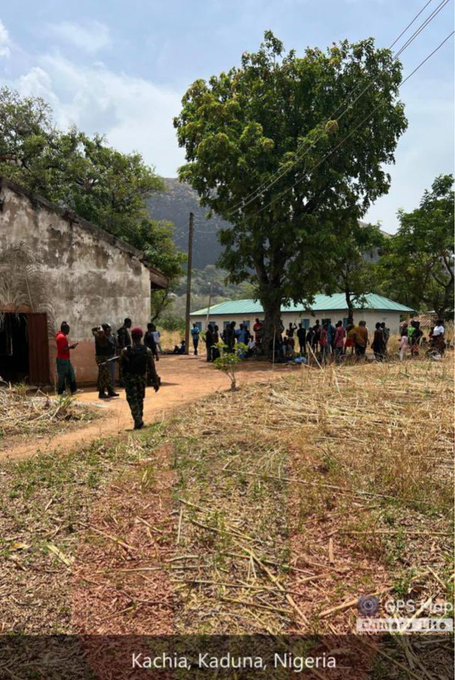

KADUNA — While the Nigerian Army is celebrating the rescue of 31 hostages following a terrorist raid on an ECWA Church in Ariko Village, the atmosphere on the ground is far from celebratory. Bitter residents and bereaved families are accusing the military of a “convenient” absence during the massacre, claiming that official press releases are being used to mask a failed security architecture.
The military reported that its troops intercepted terrorists in the Kachia Local Government Area after a distress call, engaging them in a fierce firefight that forced the gunmen to abandon 31 captives. However, for the families of the five worshippers whose remains were recovered at the scene, the “swift response” described by the Army came far too late.
“Where Were They?” — Victims’ Families Speak Out
“It is easy to write a statement in an office in Kaduna, but we were the ones facing the bullets,” said a relative of one of the deceased, who asked not to be named for fear of reprisal. “The terrorists spent time selecting who to kill and who to take. If the response was truly ‘swift,’ my brother would still be alive. They only showed up when the damage was already done.”
The sentiment across Ariko and neighboring communities is one of deep skepticism. Residents point out that despite the area being a known flashpoint for religious targeting, there was no stationary security presence at the church during the Easter service. Many view the Army’s “victory” as a face-saving exercise after yet another lapse in intelligence.
Press Releases vs. Reality
Critics in Kaduna State have long complained that the military is “quick to dispatch press statements but slow to dispatch troops.” Public commentator Shehu Musa noted that while the rescue of 31 people is a relief, the recurring nature of these attacks suggests that the military is in a “reactive mode” rather than a “preventive” one.
“We see these reports of ‘blood trails’ and ‘significant casualties’ among terrorists every time, yet the same terrorists return a week later to another village,” Musa observed. “The people are tired of hearing about ‘foiled attacks’ after five people have already been buried. We want a military that is present before the first shot is fired.”
Troops Dig In Amidst Distrust
In response to the backlash, the Nigerian Army has reaffirmed its commitment to protecting citizens, announcing that additional reinforcements have been sent to saturate the Ariko axis. Troops are reportedly following blood trails into the forest to track the wounded attackers, but local vigilantes say the gunmen have a head start that the military is unlikely to close.
As the 31 rescued survivors undergo medical checks, the focus in Southern Kaduna remains on the glaring gap between official narratives and the reality of life in the “Kajuru-Kachia” axis. For many, the Army’s latest report is just another chapter in a long history of too little, too late.