

ABUJA — Electricity consumers across the Federal Capital Territory have raised an alarm over what they describe as a “silent” and unannounced upward review of electricity tariffs by the Abuja Electricity Distribution Company (AEDC).
As of late March 2026, residents in major hubs including Gwarinpa, Wuse, and Lugbe reported significant discrepancies in their credit units, alleging that the cost per kilowatt-hour has jumped without the mandatory public consultation required by the Nigerian Electricity Regulatory Commission (NERC).
The Cost of “Guaranteed” Power
Under the current Service-Based Tariff (SBT) structure, AEDC customers are billed according to the daily hours of power supply guaranteed to their specific feeder. However, the reality on the ground often tells a different story.
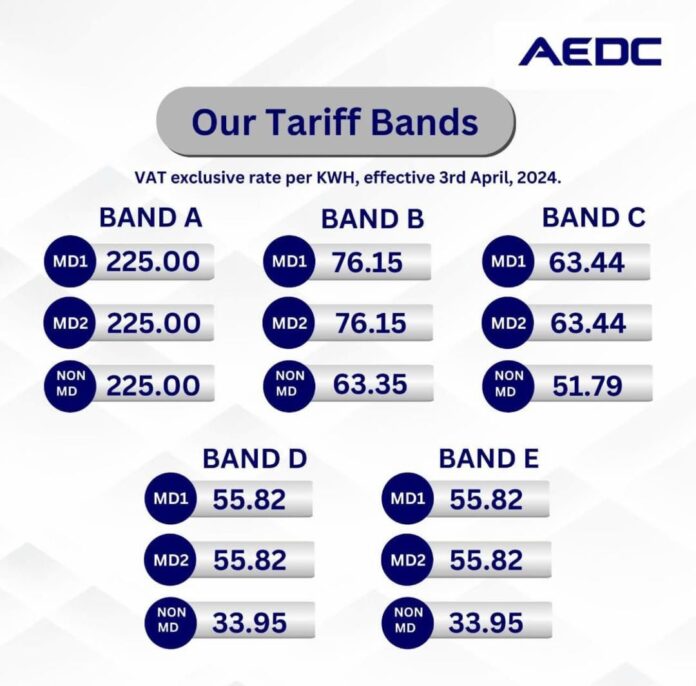
| Service Band | Min. Daily Supply | 2026 Rate (₦/kWh) |
| Band A | 20+ Hours | ₦209.50 |
| Band B | 16+ Hours | ₦63.00 |
| Band C | 12+ Hours | ₦50.00 |
| Band D | 8+ Hours | ₦43.00 |
| Band E | 4+ Hours | ₦40.00 |
While a “lifeline” rate of ₦4/kWh officially remains for the most vulnerable households consuming under 50kWh monthly, many residents claim they are being pushed into higher billing brackets despite receiving less than eight hours of electricity a day.
Regulatory Fines and Systemic Errors
The latest wave of complaints follows a massive ₦200 million fine recently slapped on AEDC by NERC. The regulator found that the DisCo had been “wrongfully billing” customers in lower-tier bands (B, C, D, and E) at the premium Band A rates.
Despite NERC’s order for AEDC to issue energy token refunds to over-billed customers, many residents say they have yet to see any credit returned to their meters. “They are quick to hike the price but silent when it comes to the refunds the government ordered,” said a local business owner in Central Area.
Economic Impact
The rising cost of power is hitting the FCT’s small business sector particularly hard. With Band A rates hovering near ₦210 per unit, laundromats, cold-room operators, and small-scale manufacturers warn that the “service-based” model is becoming unsustainable.
“We are paying for 20 hours and getting twelve,” noted a hotel manager in Asokoro. “When the grid fails, we switch to diesel, which is now over ₦1,400 per litre. We are effectively paying for power twice, and both options are becoming unaffordable.”
AEDC Response
While AEDC has previously attributed billing discrepancies to “system glitches” during feeder reclassifications, the company has yet to release a formal statement regarding the latest allegations of unannounced hikes in March 2026.






