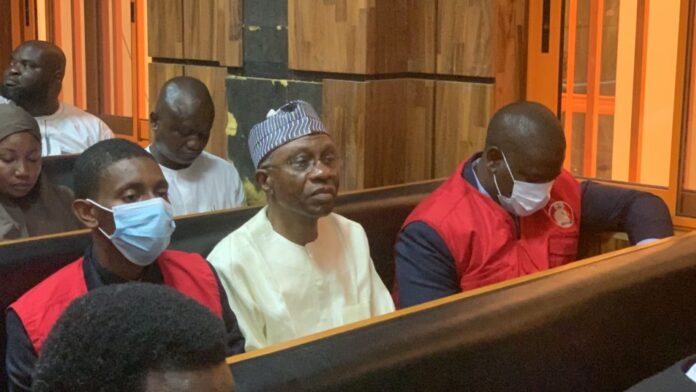
ABUJA — Nigeria is currently gripped by explosive reports of a record-breaking financial recovery, with unconfirmed claims suggesting that former Central Bank Governor Godwin Emefiele has returned a staggering ₦4 trillion to the federal coffers. The revelations, which began circulating in mid-March 2026, suggest a crackdown of unprecedented proportions aimed at the systemic looting that allegedly occurred during the eight-year administration of former President Muhammadu Buhari.
According to sources close to the investigation led by Special Investigator Jim Obazee, the alleged recovery from Emefiele includes not only the multi-trillion naira cash sum but also the surrender of ownership stakes in six commercial banks purportedly linked to the former apex bank chief. The reports further claim that a former Deputy Governor of the CBN, Tunde Lemo, has refunded $500 million, while investigators allegedly uncovered $275 million in an account belonging to the six-year-old son of a former high-ranking presidential aide from the previous dispensation.
The total haul from this sweeping probe into Buhari-era financial dealings is rumored to exceed ₦12 trillion, a figure that would represent the largest anti-corruption recovery in African history. While the Presidency has yet to issue an official white paper confirming these exact figures, the narrative aligns with the stark warnings from National Security Adviser Nuhu Ribadu, who has frequently lamented that the current administration inherited a “bankrupt” and “deeply troubled” economy due to the industrial-scale theft permitted under the previous government.
“The scale of what was taken during those eight years is only now coming to light,” one source stated, claiming that the Obazee-led team has faced intense pressure, including alleged bribe offers of millions of dollars to compromise the investigation into the former president’s inner circle.
Despite the viral nature of these claims, legal experts urge caution. Emefiele remains entangled in multiple court cases involving charges of fraud and the unauthorized withdrawal of $6.23 million from the CBN vault under a forged presidential signature—an incident that allegedly took place in the final months of the Buhari regime. As of now, the Economic and Financial Crimes Commission (EFCC) has not released a public breakdown verifying the ₦4 trillion or ₦12 trillion totals currently dominating social media discourse.
As Nigerians process these staggering numbers, a wave of public skepticism remains. Many citizens are calling for full transparency, noting that while the recovery of Buhari-era loot is vital, the “shaking of Nigeria” will only truly occur when the current administration’s own financial dealings are held to the same rigorous standard of scrutiny.