
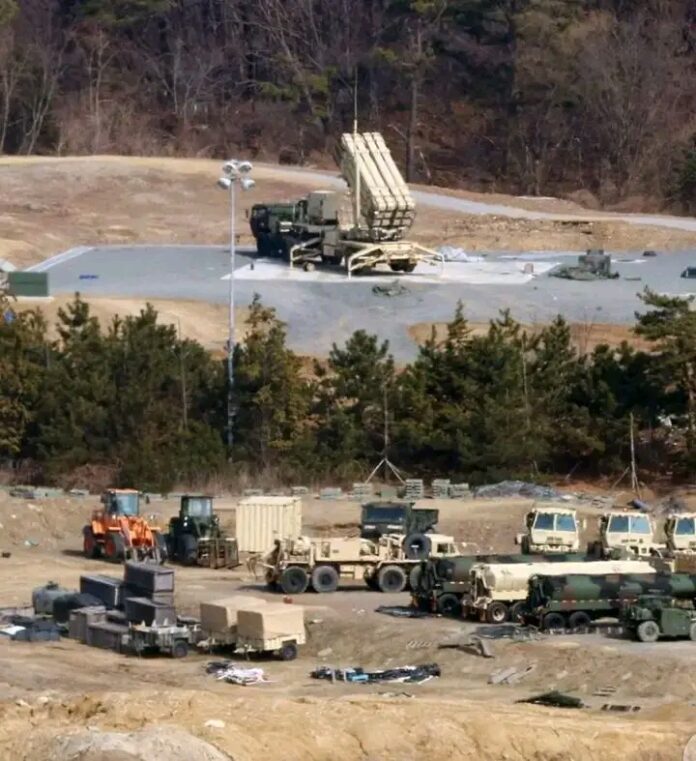

SEOUL – The United States has begun the urgent redeployment of Terminal High Altitude Area Defense (THAAD) systems from South Korea to the Middle East, following a series of Iranian missile and drone strikes that have severely depleted regional interceptor stocks.
The move comes amid reports that Iranian forces successfully targeted and destroyed a critical THAAD radar at the Muwaffaq Salti Air Base in Jordan. While the Pentagon has not officially confirmed the full extent of the damage, local reports suggest as many as four THAAD radar installations across the region may have been hit, creating significant blind spots in the U.S. defensive umbrella.
The decision to strip assets from the Korean Peninsula has sparked immediate domestic concern in Seoul. The THAAD system, designed to intercept short, medium, and intermediate-range ballistic missiles at high altitudes, is a cornerstone of South Korea’s upper-tier defense against potential threats from the North.
South Korean President Lee Jae Myung addressed the growing anxiety during a press briefing today, acknowledging the strategic shift.
“While our administration has expressed opposition to this move, we recognize that Washington is proceeding based on operational necessity in the Middle East,” President Lee stated. “We are working closely with our allies to ensure that our own defense posture remains robust and that no security vacuum is created.”
Military analysts warn that the redeployment highlights a growing vulnerability in global U.S. missile defense capacity. The high cost and limited production of THAAD interceptors mean that a prolonged conflict in the Middle East could leave other strategic theaters, like the Indo-Pacific, exposed.
In Washington, defense officials defended the move as a temporary but necessary measure to protect U.S. personnel and regional partners currently under direct fire. However, the withdrawal of such a high-profile asset from South Korea is expected to dominate upcoming security talks between the two nations, as Seoul pushes for a clear timeline for the system’s return or an alternative reinforcement plan.
For now, the South Korean Ministry of National Defense has raised its alert level, emphasizing that domestic missile defense systems, including the L-SAM and Patriot batteries, remain fully operational to counter any immediate provocations.






