
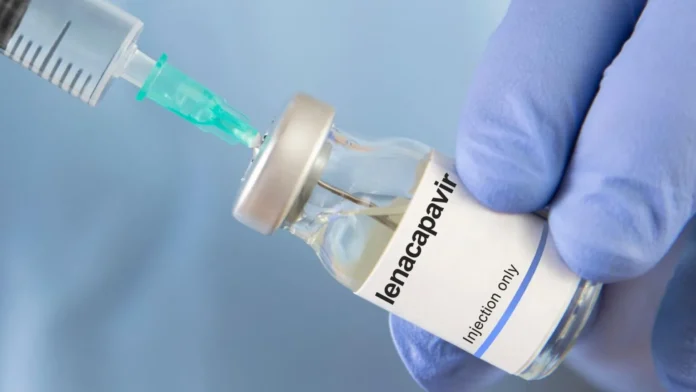

ABUJA, Nigeria – In what health officials are calling a definitive “game-changer” for public health, Nigeria has officially become one of the first countries in the world to roll out Lenacapavir, a revolutionary twice-a-year injectable drug for HIV prevention.
The National Coordinator of the National AIDS, Viral Hepatitis, and STIs Control Programme (NASCP), Dr. Adebobola Bashorun, confirmed that the first shipment arrived this month, signaling a shift from daily pills to a more sustainable long-term solution.
A “100% Shield” Against Infection
The move follows breakthrough clinical trials showing that the drug provides nearly 100% protection against HIV infection when administered just once every six months. For a country like Nigeria, which continues to face high rates of new infections, the convenience of a biannual shot is expected to solve the long-standing issue of “pill fatigue” and poor adherence to daily medication.
“Nigeria is one of the first adopters globally,” Dr. Bashorun stated. “What we need to do more is stop new infections. With twice-a-year injections, you have 100% protection, and it stops transmission.”
The Rollout Strategy
The Federal Government has launched an initial pilot phase across eight states and the Federal Capital Territory (FCT). The targeted states include:
- North & Central: Gombe, Kwara, and Benue.
- South & East: Anambra, Ebonyi, Akwa Ibom, and Cross River.
The program currently prioritizes high-risk populations, including serodiscordant couples (where one partner is HIV-positive and the other is not), female sex workers, and other vulnerable groups.
Addressing the Cost Barrier
While Lenacapavir carries a steep price tag of over $40,000 per year in Western markets, a landmark agreement involving the Global Fund and generic manufacturers has slashed the cost for Nigeria. The drug is expected to be available for approximately $40 (roughly ₦60,000) per person annually in Nigeria, making it accessible through government-supported health facilities.
A Word of Caution
Despite the excitement, Dr. Bashorun reminded the public that Lenacapavir is a preventative tool (PrEP), not a cure. He also noted that while it is highly effective against HIV, it does not protect against other sexually transmitted infections or pregnancy, and it is currently not recommended for pregnant women due to ongoing safety evaluations.
With over 179,000 doses expected to be delivered by 2028, Nigeria is positioning itself as a global leader in the fight to end the AIDS epidemic by 2030.






