
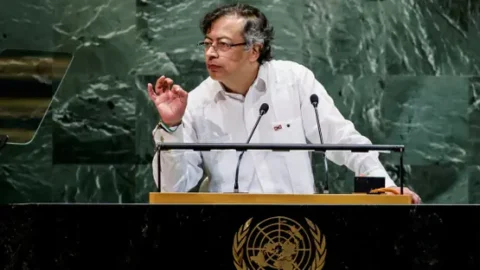
NEW YORK — A geopolitical firestorm is erupting after the U.S. Department of Justice designated Colombian President Gustavo Petro a “priority target” in a high-stakes investigation into alleged drug ties and illicit campaign financing. Federal prosecutors in Manhattan and Brooklyn are reportedly probing whether Petro’s 2022 campaign was fueled by cartel cash from Mexico’s Sinaloa cartel in exchange for blocking the extradition of top traffickers. While Petro has vehemently denied the claims, stating he has never spoken to a drug trafficker, the U.S. move marks a dramatic escalation against a sitting Latin American leader.
The news has triggered an immediate and vocal reaction across Nigeria, where citizens and transparency activists are now yearning for the United States to launch a similar, public investigation into President Bola Tinubu. The comparison has set social media ablaze, with many pointing to the 1993 Chicago court case where Tinubu was compelled to forfeit $460,000 in suspected narcotics proceeds to the U.S. government. Public interest has been reignited by certified court documents showing Tinubu’s alleged involvement in banking proceeds from a Chicago heroin ring in the early 1990s. Although he was never criminally indicted, the forfeiture remains a national scandal for many who believe the U.S. is covering for him to maintain regional stability.
Critics argue that if the U.S. can aggressively target a “leftist firebrand” like Petro, it should show the same resolve in investigating a key African ally whose past is arguably even more documented in American courts. The U.S. District Court for the District of Columbia recently lambasted the FBI and DEA for delaying the release of these files, issuing a final ultimatum for February 2026. As the Petro investigation gathers steam in New York, the pressure is mounting on Washington to treat the Chicago drug case with the same level of transparency and urgency.