
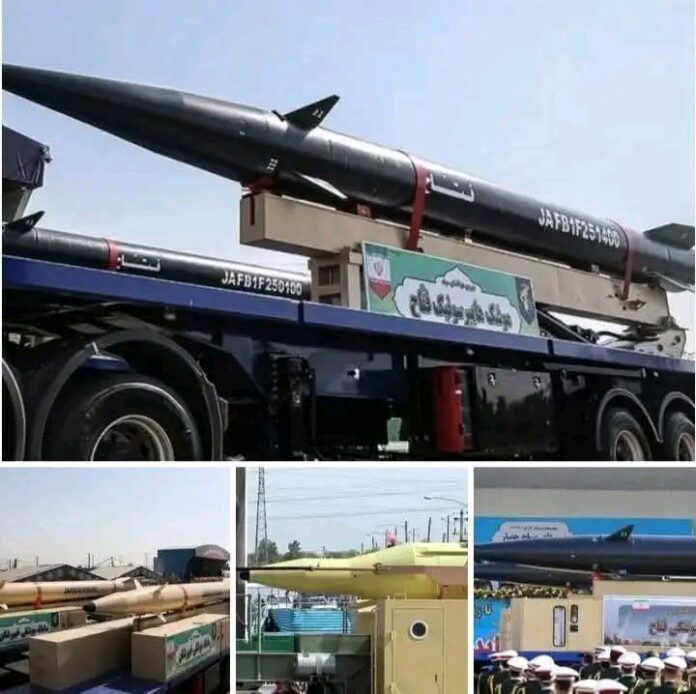

TEHRAN — In a move that has sent shockwaves through global capitals, Iranian military authorities have reportedly issued a chilling assessment of their strike capabilities, claiming the power to launch up to 800 missiles per hour in a full-scale conflict.
The declaration, which comes amid the most volatile period in the Middle East in decades, suggests that Tehran has amassed a staggering stockpile of roughly 250,000 missiles. Iranian officials claim this arsenal is sufficient to sustain a high-intensity war against the United States, Israel, and allied regional powers for at least five years.
A Region on the Edge
The announcement follows months of escalating hostilities and targeted strikes across the region. By publicizing such specific figures, Tehran appears to be attempting to establish a “balance of terror,” signaling to Washington and Tel Aviv that any further escalation will be met with a sustained barrage of unprecedented proportions.
“The era of ‘hit and run’ is over,” a regional security analyst noted. “Tehran is no longer just talking about deterrence; they are talking about endurance. The claim of a five-year war capacity is designed to tell the West that they cannot outlast Iran in a war of attrition.”
Skepticism vs. Reality
While military experts caution that the exact numbers in Iran’s arsenal are notoriously difficult to verify independently, there is a consensus among intelligence agencies that Iran possesses the largest and most diverse missile program in the Middle East.
Western defense analysts have noted that even if the 250,000 figure is inflated for propaganda purposes, the sheer volume of Iran’s short and medium-range ballistic missiles remains a significant threat to regional stability, oil shipping lanes, and U.S. military assets in the Gulf.
Global Economic and Security Fallout
The rhetoric has already begun to rattle global markets. With Iran’s proximity to the Strait of Hormuz—a vital artery for the world’s oil supply—the threat of a prolonged conflict has led to fresh volatility in crude oil prices.
International security agencies have expressed concern that an escalation of this magnitude would not be contained within the Middle East. A missile campaign on the scale described by Tehran would likely draw in multiple global powers, potentially triggering a wider international conflict and a catastrophic disruption of the global economy.
The Path Forward
As the United Nations and various diplomatic channels scramble to de-escalate the situation, the world remains on high alert. The question remains whether this is a desperate bluff by a besieged regime or a genuine warning of a coming firestorm that could reshape the 21st-century geopolitical landscape.






