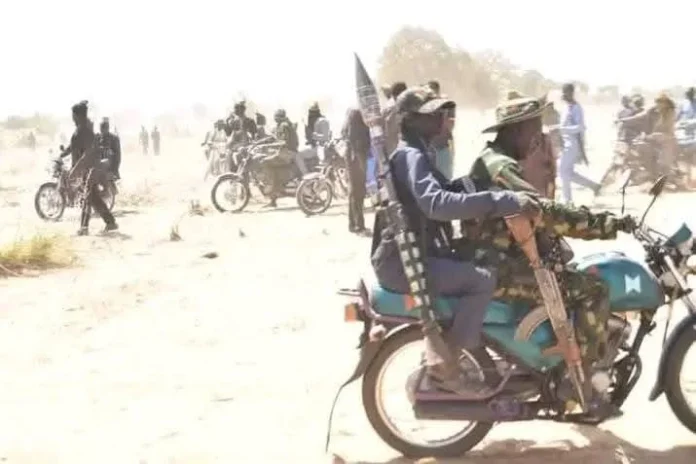

MAKARFI, Kaduna State – The drums of terror are beating louder in Northern Nigeria as reports emerge of a fresh, coordinated assault by bandits on Makarfi Local Government Area. In a daring Sunday night raid that has left the community in a state of total lockdown, armed marauders reportedly stormed the area, snatching a prominent local politician and several terrified villagers.
A Night of Gunfire and Chaos
The quiet of Makarfi was shattered by the familiar, bone-chilling sound of sporadic gunfire as the invaders moved through the community with impunity. Eyewitnesses describe a scene of pure bedlam, with residents fleeing into the surrounding bushes under the cover of darkness. While the exact number of abductees remains fluid, the snatching of a high-profile political figure suggests a targeted operation designed for maximum ransom leverage.
Kaduna’s Week of Horrors
The Makarfi invasion is the latest bloody chapter in what has become a “week of horrors” for Kaduna State. The security map of the state is currently bleeding:
- Kachia (March 2): 16 villagers snatched in a midnight raid on Mararraba Mazuga.
- Kajuru (March 4): Five souls lost and multiple residents abducted in the Kallah Afogo community.
- Chikun (March 3): A family of three dragged from their home in Millennium City amidst a hail of bullets.
- Kauru (March 7): The shocking abduction of Fr. Nathaniel Asuwaye and 10 others, leaving three dead.
Security Forces on High Alert
The Kaduna State Police Command is reportedly mobilizing tactical units to the Makarfi axis to track the kidnappers’ escape route. While the military has recently touted the neutralization of several bandit kingpins, the “hit-and-run” nature of these latest attacks suggests that the terror cells are far from defeated and are instead expanding their reach into previously “safe” zones like Makarfi.
A State Holding Its Breath
As families in Makarfi wait for the dreaded phone call demanding millions in ransom, the atmosphere in Kaduna is one of palpable despair. With every passing hour, the pressure mounts on the state government and security agencies to move beyond “clearance operations” and provide real-time protection for the rural masses currently living at the mercy of the gun.