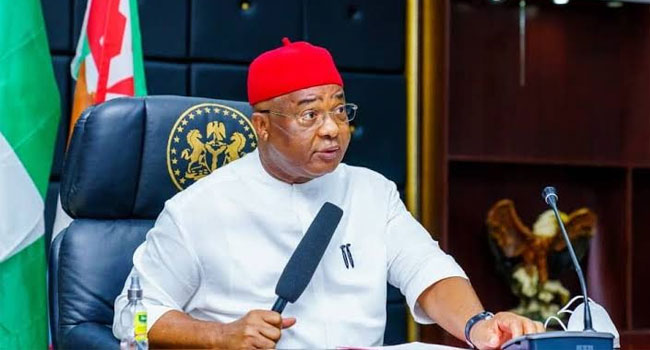
OWERRI, Nigeria — The Imo State Government has officially moved to quell a brewing leadership crisis in the Umuderim community, calling for an immediate halt to hostilities surrounding the succession of the traditional ruler and President General positions.
The intervention follows reports of heightening tension as rival factions spar over the revered Ezeship stool and the leadership of the town union. Concerns had mounted that the dispute was on the verge of a total breakdown of law and order before the state’s mediation.
Government Directives
Officials from the Ministry of Local Government and Chieftaincy Affairs have met with key stakeholders, issuing a stern warning against the use of “self-help” or violence to resolve the impasse. The government emphasized that any selection of a traditional ruler must strictly adhere to the community’s established constitution and the Imo State Traditional Rulers and Chieftaincy Law.
“The state will not stand by while community peace is threatened by leadership tussles,” a ministry spokesperson stated. “We urge all parties in Umuderim to exercise restraint while the government reviews the merits of all claims to ensure a transparent transition.”
Core of the Dispute
Insiders in Umuderim report that the feud stems from deep-seated disagreements over “zoning” versus “hereditary” rights to the throne. The conflict is compounded by a secondary battle over the President General (PG) position, with various interest groups alleging tenure elongation and lack of financial accountability within the current town union executive.
The situation mirrors recent tensions in other autonomous communities across the state, prompting the Governor’s office to reiterate that local governance must be rooted in fairness and established customs.
Path to Resolution
In light of the government’s directive, several community elders have appealed to the youth to remain calm and avoid being used as instruments of destabilization. The Ministry has requested that both factions submit their supporting documentation for verification.
Sources indicate that if a consensus is not reached within a specified timeframe, the state may be forced to appoint a Caretaker Committee to manage the community’s affairs until a permanent solution is achieved.