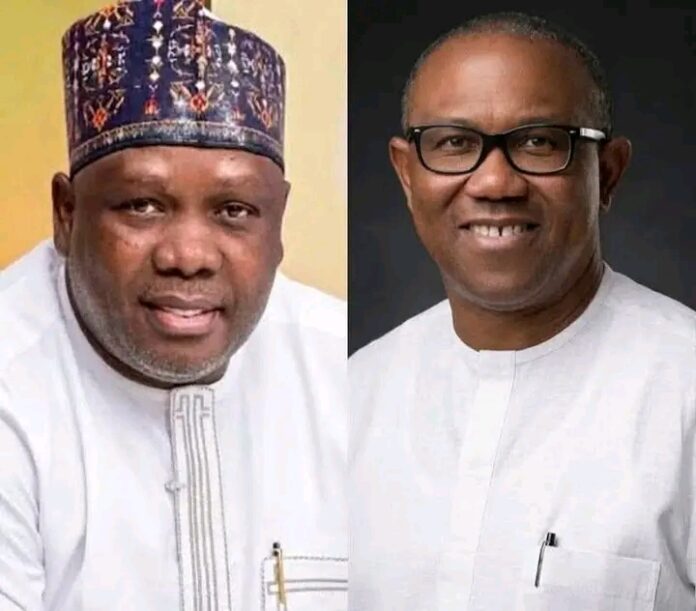
ABUJA – A fierce war of words has broken out between Daniel Bwala, Special Adviser to President Tinubu, and former Labour Party presidential candidate Peter Obi over alleged secret recruitment talks during the 2023 election cycle.
The row began when Bwala, during a recent interview with media personality Daddy Freeze, claimed that Obi had sought his services to bolster his presidential bid. Bwala alleged the encounter was facilitated by former President Olusegun Obasanjo during a private meeting at the Hilton Hotel in London.
“Peter Obi asked me to work for him in 2023, but I refused,” Bwala stated, adding that he turned down the offer because he viewed Obi’s political platform as lacking a clear, sustainable identity.
The rebuttal from the Obi camp was swift and scathing. In a statement released through his spokesperson, Ibrahim Umar, the former Anambra State Governor dismissed the claims as “fictitious and a product of a desperate imagination.”
Obi’s team took the opportunity to launch a personal offensive, distancing the candidate from what they termed “transactional politics.”
“Mr. Peter Obi does not know Daniel Bwala in the capacity he claims, and at no point did he request his support,” the statement read. “Obi’s brand of politics is built on competence and integrity. He works with intelligent, value-driven people—not hungry politicians looking for the next available paycheck.”
The statement further mocked Bwala’s current role in the Tinubu administration, suggesting that Obi would “rather spend money buying desks for schoolchildren in Bwala’s village than spend a kobo on his political services.”
Political analysts suggest the timing of Bwala’s claim may be an attempt to deflect from the heavy criticism he received following a recent appearance on Al Jazeera’s Head to Head, where his performance was widely panned by Nigerians on social media.
As of Saturday morning, Bwala has yet to provide documentary evidence of the alleged London meeting, while the Obi camp maintains that the presidency is merely using “attack dogs” to distract from the country’s current economic challenges.