

TEHRAN — In a move that has sent global energy markets into a tailspin, the Iranian government has officially declared the Strait of Hormuz closed to all maritime traffic, warning that its forces will open fire on any vessel attempting to breach the blockade.
The announcement, carried by state-run Iranian media on Monday, marks the most significant escalation in the Middle East crisis to date. By choking off the world’s most vital oil artery, Tehran has effectively placed a stranglehold on the global economy, sparking immediate fears of a worldwide energy crisis and a direct military confrontation with Western powers.
A Fifth of World Oil at Risk
The Strait of Hormuz, a narrow waterway separating Oman and Iran, serves as the only exit point for nearly 20% of the world’s total oil consumption. It links the Persian Gulf with the Gulf of Oman and the Arabian Sea, acting as the primary transit route for crude from major producers including Saudi Arabia, Kuwait, the UAE, and Iraq.
“The Strait is closed,” an Iranian military spokesperson reportedly stated. “Any ship, whether commercial or military, that enters these waters without our authorization will be treated as a hostile target and fired upon immediately.”
Energy Markets in Turmoil
News of the closure triggered an instantaneous spike in global crude prices, with analysts warning that a prolonged blockade could see oil prices soar past $150 per barrel. Shipping insurance premiums have already skyrocketed, and several major oil tankers currently in the region have reportedly dropped anchor or diverted course to avoid the flashpoint.
Economic experts warn that a sustained shutdown of the Strait would be catastrophic for the global economy, potentially triggering a deep recession in Europe and Asia, which are heavily dependent on Gulf oil and liquefied natural gas (LNG).
Military Standoff Looming
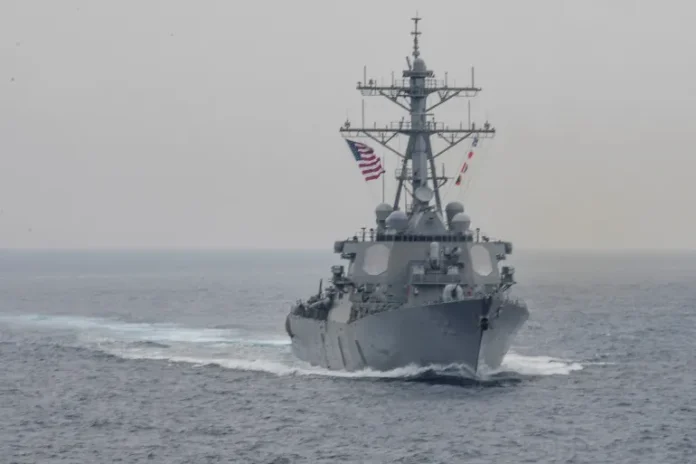
The United States and its allies, who maintain a significant naval presence in the region through the Fifth Fleet, have long maintained that the Strait of Hormuz is an international waterway that must remain open for the “free flow of commerce.”
While the White House has yet to issue a formal response to the latest threat, military analysts suggest that a U.S.-led “freedom of navigation” operation is almost certain. Such a move would bring American and Iranian naval assets into direct contact, significantly increasing the risk of a full-scale regional war.
Geopolitical Fallout
The closure comes just hours after Tehran boasted of an arsenal of 250,000 missiles, a claim intended to deter foreign intervention. By weaponizing the Strait of Hormuz, Iran appears to be betting that the world’s dependence on its oil routes will force the international community to meet its diplomatic demands.
As the UN Security Council prepares for an emergency session, the world watches with bated breath to see if diplomacy can reopen the waterway or if the first shot fired in the Strait will signal the beginning of a global conflagration.