
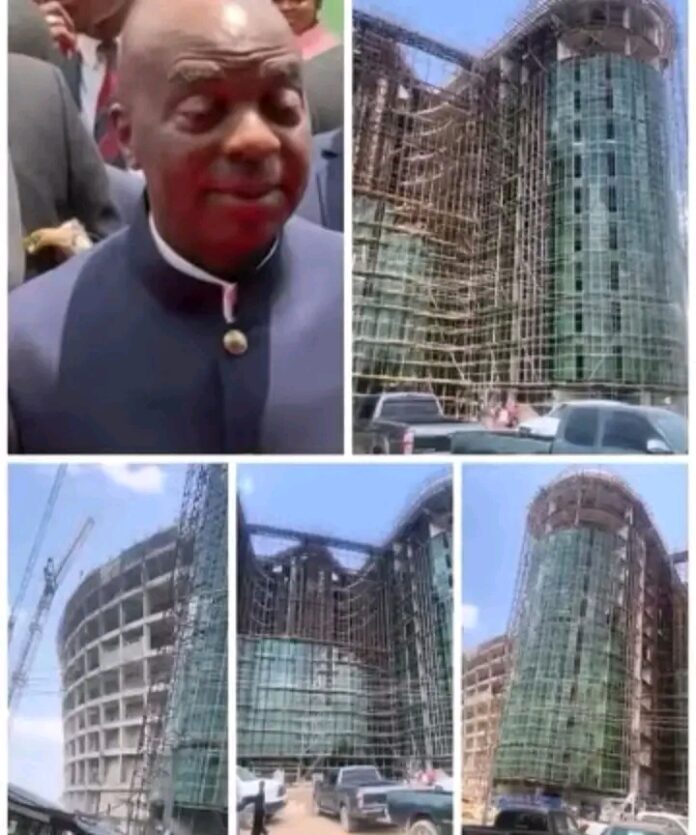

OTA, NIGERIA – The massive expansion of the Living Faith Church Worldwide headquarters, led by Bishop David Oyedepo, has ignited a fierce public debate regarding the economic priorities of religious institutions in Nigeria. Critics of the project argue that the multi-billion naira “Ark” project, funded primarily through congregational tithes and offerings, represents a missed opportunity for industrial development and job creation for the nation’s growing population of unemployed graduates.
Opponents of the construction describe the site as a “massive business centre” designed for the benefit of the Oyedepo family rather than the broader public good. Public discourse surrounding the project has grown increasingly sharp, with some observers labeling the expenditure as a display of personal gain at the expense of the well-being of the faithful. These critics contend that if such substantial capital had been directed toward establishing factories or corporate entities, it could have provided sustainable livelihoods for thousands of Nigerians currently facing economic hardship.
The debate highlights a deep-seated tension between the growth of Nigeria’s “megachurch” culture and the country’s urgent need for industrialisation. While supporters of the church maintain that the project creates construction jobs and serves a spiritual mandate, detractors argue that the continuous accumulation of wealth by high-profile clergy is a form of exploitation. They suggest that the “wicked and selfish” nature of such large-scale religious investments reflects a disconnect between spiritual leadership and the socio-economic realities of the average citizen.
As the project nears completion, the conversation has shifted toward a broader call for “religious awakening,” with some Nigerians urging a re-evaluation of how religious funds are utilised. The controversy underscores a growing demand for accountability within faith-based organisations, as the public increasingly questions whether the financial contributions of the masses should be prioritised for monumental architecture or for tangible economic empowerment.