

By Our Defense Correspondent
In a move that has sent shockwaves through the West African geopolitical corridor, the United States administration under President Donald Trump has officially requested the establishment of a drone refueling and logistics station within Nigeria’s borders.
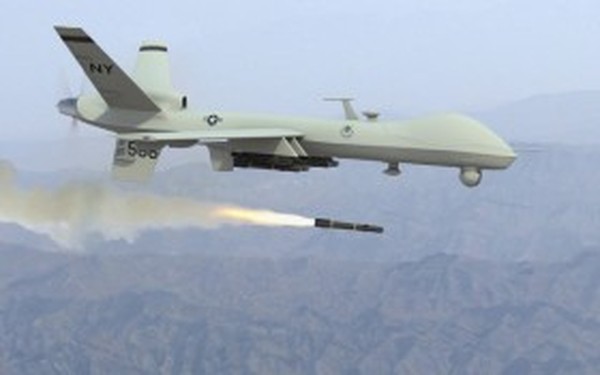
The proposal, which aims to deepen the security partnership between Washington and Abuja, would serve as a critical “lily pad” for American surveillance and strike-capable drones. These assets, currently launching from Accra, Ghana, would use the Nigerian facility to extend their reach across the Sahel, providing real-time intelligence and air cover for Nigerian troops battling entrenched insurgencies.
A Strategic Pivot
Sources within the Ministry of Defense suggest that high-level talks are already “advanced.” Unlike traditional military bases that involve a heavy footprint of ground troops, this facility is designed as a specialized tech hub for the MQ-9 Reaper fleet.
While the exact location remains under wraps for security reasons, insiders indicate that a site in North-East Nigeria—the heart of the counter-insurgency effort—is the preferred choice. Previous considerations for Lagos or Abuja were reportedly sidelined to avoid political friction and urban congestion.
Gumi Sounds the Alarm
However, the proposal is already hitting a wall of stiff domestic resistance, led by controversial cleric Sheikh Ahmad Gumi.
Known for his “forest diplomacy” and advocacy for negotiating with bandits, Gumi has come out swinging against the American overture.
“We do not need foreign boots or foreign wings on our soil to solve our internal problems,” Gumi stated in a sharp rebuttal. The cleric warned that inviting the U.S. military into Nigeria would turn the country into a “theatre of proxy wars” and attract international terror franchises looking to strike American interests.
Gumi and his circle of influence argue that the U.S. presence is a “Trojan horse” for imperial interests. He suggested that if Nigeria must seek external hardware support, it should look toward “neutral” partners like Turkey or China rather than becoming a satellite for Washington’s global drone program.
The Sovereignty Debate
The news has ignited a fierce debate in the National Assembly. While some lawmakers see it as a necessary evil to finally crush the decade-long insurgency, others fear the loss of territorial integrity.
“The question isn’t just about drones; it’s about who controls our skies,” said one ranking member of the Senate Committee on Foreign Affairs. “If an American drone strikes a target on Nigerian soil, who is accountable to the Nigerian people? These are the fine prints we must scrutinize.”
As the Trump administration pushes for a more aggressive counter-terrorism stance in Africa, the Nigerian government now finds itself at a crossroads: accept the high-tech hand of Uncle Sam and risk the wrath of local power brokers like Gumi, or reject the offer and continue the grind against insurgency with limited aerial supremacy.
For more updates on this developing story, visit the official Ministry of Foreign Affairs portal or follow the U.S. Embassy in Nigeria for official statements.





