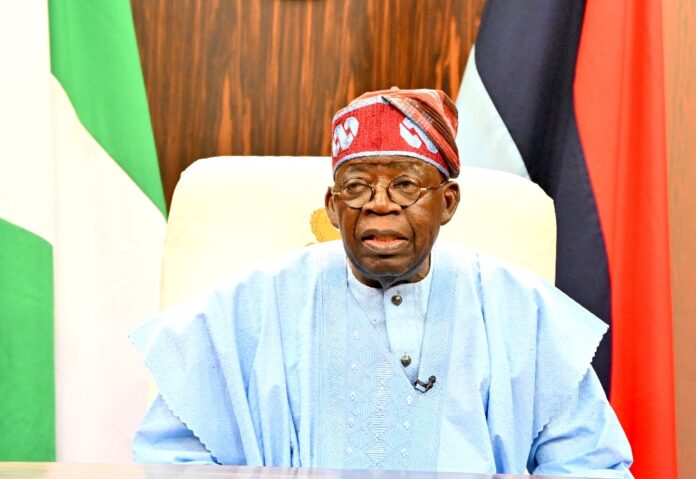
ABUJA — President Bola Ahmed Tinubu has come under heavy fire for approving a massive ₦7.6 trillion ($1.42bn and ₦5.57trn) debt write-off for the Nigerian National Petroleum Company Limited (NNPCL), a move critics describe as a blatant act of financial recklessness and constitutional subversion.
The cancellation, finalized in late 2025 following a “reconciliation of records,” wipes out nearly 96% of the NNPCL’s dollar debts and 88% of its Naira-denominated liabilities up to December 2024. While the Presidency defends the action as a necessary step to clean up the NNPCL’s balance sheet for its planned stock exchange listing, opposition leaders and legal experts are calling it a “betrayal of the Nigerian people.”
‘An Impeachable Offence’ — ADC Fumes
The African Democratic Congress (ADC) has led the charge against the President, declaring the unilateral debt waiver an “impeachable offence.” ADC spokesperson Bolaji Abdullahi asserted that the funds belong to the Federation Account, not the President’s private discretion.
“Under Section 162 of the 1999 Constitution, all revenues must be paid into the Federation Account and shared among the three tiers of government,” the ADC stated. “This write-off was done without legislative approval or consultation with states, effectively short-changing 36 state governors and 774 local governments.”
Peter Obi: ‘Corruption of the Highest Order’
Former Labour Party presidential candidate Peter Obi joined the outcry, labeling the write-off as “corruption of the highest order” and “fiscal rascality.” Obi questioned why the NNPCL—which recently claimed to have made billions in profit—is now being granted “unexplained debt forgiveness” while citizens are crushed by higher taxes and subsidy removals.
“This almost ₦8 trillion write-off exceeds the combined 2025 federal budget allocations for education, health, and agriculture,” Obi noted. He added that the NNPCL is still facing audit queries for failing to account for trillions in missing funds and wasting billions on non-functional refineries.
Transparency vs. Impunity
Civil society groups and media outlets have noted the “deafening silence” from the National Assembly, with many accusing the legislature of “wilful surrender” to the executive.
- Legitimatising Failure: Critics argue that the waiver legitimises years of under-remittance and weak oversight.
- The Burden on the Poor: While the NNPCL’s slate is wiped clean, Nigerians continue to struggle with surging food prices and a vanishing middle class.
Legal experts suggest that aggrieved state governors have a direct route to the Supreme Court to challenge the legality of the write-off. As Nigeria inches toward 2027, the ₦7.6 trillion “reconciliation” remains a symbol of the deepening divide between elite fiscal management and grassroots survival.