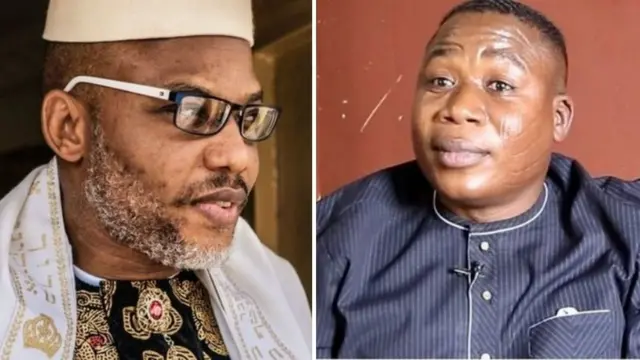
ILORIN — Prominent Islamic cleric Sheikh Muhammad has sparked a national debate over the Federal Government’s approach to judicial fairness, citing the contrasting fates of Yoruba nation agitator Sunday Igboho and IPOB leader Nnamdi Kanu.
Addressing a gathering on the state of the nation, the Sheikh questioned the consistency of the President Bola Tinubu administration in handling high-profile cases involving regional self-determination leaders.
The ‘Justice Gap’
“How can anyone say Tinubu’s government stands for justice and fairness when Sunday Igboho was arrested for treason and later freed, while Nnamdi Kanu remains in custody for the same offence?” the cleric asked. He argued that the perceived disparity in treatment is fueling feelings of marginalization and ethnic bias across the country.
Sunday Igboho, who was arrested in Benin Republic following a raid on his Ibadan home, returned to Nigeria in early 2024 after all charges were effectively dropped. In contrast, Nnamdi Kanu has remained in DSS custody since his rendition from Kenya in 2021, despite multiple court rulings ordering his release.
Calls for Political Solution
The Sheikh’s remarks coincide with renewed pressure from South-East leaders and legal experts for the Federal Government to adopt a “political solution” for Kanu’s release, similar to the leniency shown to other agitators.
Legal observers note that while the government has entered a 5-count charge against rogue police sergeants and moved to arraign Yelwata massacre suspects, the long-standing Kanu case remains a significant hurdle for national reconciliation.
Government Stance
The Presidency has consistently maintained that Kanu’s case is a judicial matter and not a political one. However, critics like Sheikh Muhammad argue that the favourable treatment of Sunday Igboho has set a precedent that makes the continued detention of Kanu appear discriminatory.