
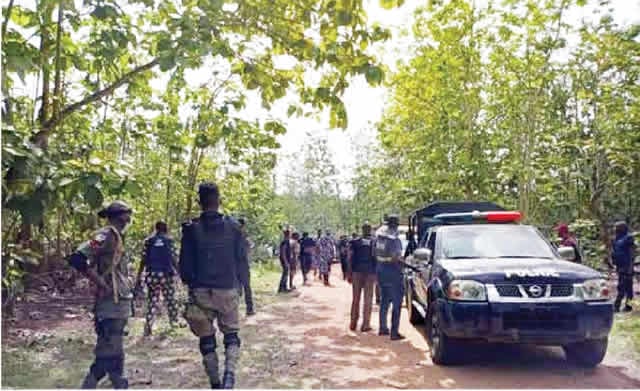

ABUJA, NIGERIA — In a decisive move to overhaul Nigeria’s failing security architecture, President Bola Tinubu has formally called on the Senate to begin the constitutional amendment process required to establish State Police. The President issued the directive on Wednesday night during an interfaith Iftar at the State House, framed as an urgent necessity to “reclaim our forests from marauders.”
A Command for Restructuring
Addressing the leadership of the National Assembly, Tinubu argued that the current centralized policing model is insufficient to handle the scale of terrorism, banditry, and insurgency currently ravaging the federation.
“Nigeria is extremely challenged,” the President told the lawmakers. “What I will ask tonight is that you start thinking about how best to amend the Constitution to incorporate state police, so we can secure our country… and free our children from fear.”
This appeal marks the climax of a campaign the President has championed since February 2024, when he first approved a joint federal-state committee to study the modalities for subnational policing. By November 2025, he had already urged a review of relevant laws, but this latest formal request to the Senate signifies a “move aggressively” phase for the administration.
The Federation in Crisis
The President’s call for state policing comes as regional leaders report a near-total breakdown of order:
- The 10,000-Bandit Threat: In Bauchi, Governor Bala Mohammed recently revealed that over 10,000 “well-armed” bandits have occupied the Alkaleri axis, recruiting locals and former illegal miners.
- The Lakurawa Incursion: In Kebbi, the extremist Lakurawa group has begun carrying out reprisal massacres in mosques, killing worshippers during sacred prayers.
- The Humanitarian Toll: These security failures coincide with a $347 million shortfall in UN aid, threatening millions with starvation as early as next month.
The “Regency” and the Constitutional Hurdle
While the President pushes for restructuring, critics like Cardinal Onaiyekan and Buba Galadima remain skeptical of the National Assembly’s priorities. They have labeled the current government a “shadow regency”—managed by Nuhu Ribadu and the First Lady—and question whether the move for state police is a genuine security reform or a tool for political consolidation.
Furthermore, the proposal faces a delicate religious-legal landscape. As Northern leaders warn that the U.S. bill (H.R. 7457) against Kwankwaso and Sharia law could divide the country, the prospect of state-controlled armed forces adds another layer of complexity to the North-South consensus.
The Road Ahead
The Senate must now navigate the arduous process of amending the 1999 Constitution. For the President, the goal is clear: empower subnational governments to secure their own territories. For a nation weary of “audio” promises and “carpet, not cancer” headlines, the success of state policing will be measured not in constitutional clauses, but in the safety of the forests and the return of displaced millions to their homes.






