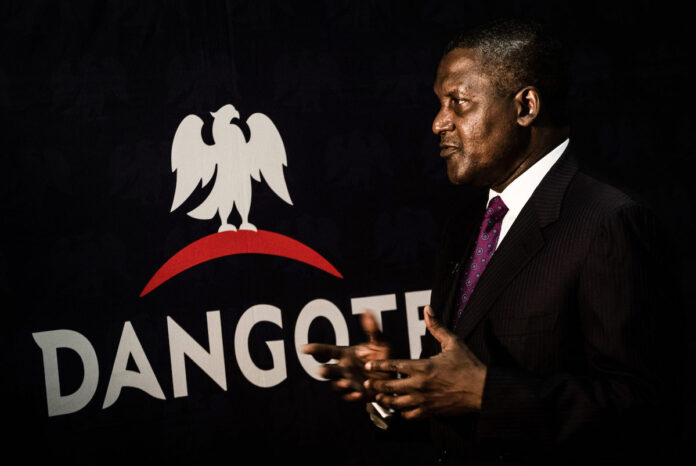
LAGOS — The prospect of petrol hitting the ₦1,000 per litre mark has become an imminent reality following a stern warning from the Dangote Petroleum Refinery regarding the astronomical costs of sea-based fuel distribution.
In a statement released on Thursday, February 5, 2026, the refinery management cautioned that a continued reliance on coastal logistics (moving fuel via ships to various ports) rather than more efficient pipeline or land-based systems could impose an additional ₦1.75 trillion annual burden on the Nigerian economy.
The Logistics ‘Tax’
According to the refinery, the cost of hiring vessels and managing coastal transfers adds a staggering ₦75 per litre to the final price of petrol.
- The ₦1,000 Threshold: If marketers do not transition to more cost-effective evacuation methods, the refinery warns that pump prices, which are already hovering between ₦835 and ₦900, will inevitably breach the ₦1,000 threshold at retail outlets across the federation.
- Gantry Price Hike: This warning follows the refinery’s own decision to raise its gantry price from ₦699 to ₦799 per litre earlier this week, citing a 10% surge in global crude oil prices which now trade above $70 per barrel.
Economic Hardship and ‘Middle Class Collapse’
The news of a potential ₦1,000 petrol price has intensified fears of a final collapse of the Nigerian middle class.
- Food Scarcity: Analysts warn that higher fuel costs will lead to a fresh spike in food prices, already exemplified by the viral “₦2,500 pepper and onions” video.
- The 2026 Forecast: The Central Bank of Nigeria (CBN) has already adjusted its 2026 projections, forecasting that petrol will average ₦950 per litre for the remainder of the year.
Political Backlash
Opposition figures have seized on the energy crisis to challenge the administration’s “Renewed Hope” narrative. PDP chieftain Gbenga Olawepo-Hashim recently slammed the President’s economic team as “treasury parasites,” arguing that the nation’s GDP has regressed while citizens are being crushed by “ill-sequenced” reforms.
Similarly, the African Democratic Congress (ADC) has linked the rising fuel costs to the ₦7.6 trillion NNPCL debt write-off, suggesting that while the state-owned oil giant’s debts are cleared, the Nigerian public is left to bear the full weight of global market volatility.
Current Market Reality
As of Friday morning, NNPCL retail stations in Lagos have adjusted their pump prices to ₦835 per litre, while independent marketers in the South-East and North-Central zones are already selling between ₦920 and ₦980 per litre.
With the Sowore-Wike feud and Malami terrorism trial dominating the headlines, the looming ₦1,000 petrol price is set to become the primary catalyst for the planned nationwide hunger protests scheduled for later this month.