
ABUJA — The air around the National Assembly was thick with more than just political tension on Tuesday, February 17, 2026, as security operatives fired multiple canisters of tear gas to disperse peaceful citizens demanding electoral transparency.
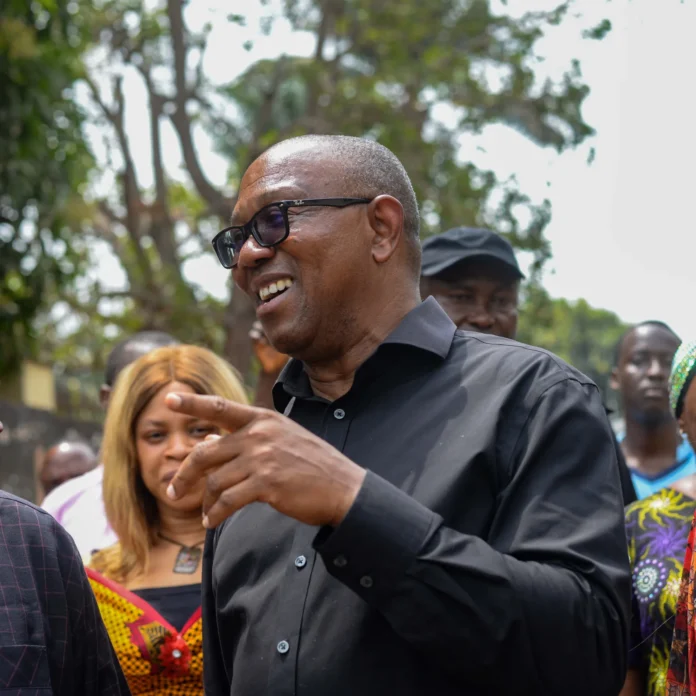
Former presidential candidate Peter Obi has reacted with visible fury, labeling the incident a “national embarrassment” and a sign that Nigeria has become a “now disgraced nation” under the current leadership.
Fumes at the Gate
The chaos erupted as hundreds of demonstrators, led by prominent voices including Dr. Oby Ezekwesili, Solomon Dalung, and activist Omoyele Sowore, gathered for the second week of the “Occupy National Assembly” protest. Their demand remains singular and firm: the mandatory, real-time electronic transmission of polling unit results must be enshrined in the 2026 Electoral Act.
Witnesses described a scene of unprovoked aggression where police officers unleashed stinging chemicals on the crowd, forcing elderly clerics, women, and journalists to scramble for safety.
“It is heartbreaking to see that a government that claims to be democratic is so terrified of its own people asking for a transparent vote,” Peter Obi stated shortly after the incident. “To tear-gas citizens who only want their votes to count is a confession of failure. We are telling the world that we are a nation where the rule of law is a joke.”
“Planning the Steal”—Nigerians Fire Back
As images of the “Iron Lady” Ezekwesili and others choking on gas went viral, Nigerians across the country—and particularly those in the diaspora—unleashed a wave of biting criticism against the President Bola Tinubu administration and the Senate.
- “Handcuffs for Critics, Gas for Voters”: “Yesterday they filed cybercrime charges against El-Rufai for tapping a phone, today they are gassing us for wanting our votes transmitted,” tweeted one popular analyst. “This government is more efficient at suppressing Nigerians than at stopping the bandits in the North.”
- The “Rubber Stamp” Senate: Critics on social media blasted Senate President Godswill Akpabio, accusing the red chamber of acting as a “security wall” for the Presidency. “They have money for ‘holiday’ allowances, but they don’t have network for our votes. And when we ask why, they give us tear gas,” another resident noted.
- “The Poison Scare”: Some protesters claimed the gas used today felt “unusually peppery,” leading to wild—though unproven—speculations on the scene about the inclusion of toxic additives, especially following recent allegations regarding the importation of Polish toxins.
The Fight for Clause 60
The protest centers on the Senate’s refusal to adopt the House of Representatives’ version of Clause 60, which makes electronic transmission compulsory. By retaining a “manual backup,” activists argue the Senate is creating a “legal loophole” for the manipulation of results at collation centers—the very stage where most Nigerian elections are “won and lost.”
Despite the fumes and the barricades, the protesters have vowed to return. For Peter Obi and the civil society coalition, the message to the National Assembly is clear: the more gas they fire, the louder the demand for transparency will become.