
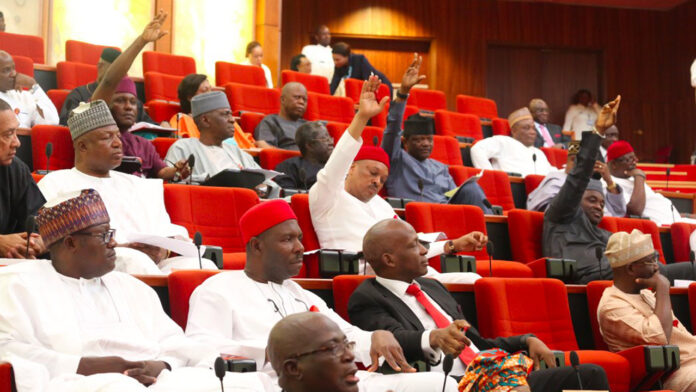

ABUJA – The hallowed chambers of the Nigerian Senate descended into a state of near-anarchy on Tuesday as a fierce confrontation broke out among lawmakers. The spark was a controversial motion to rescind an earlier decision regarding the electronic transmission of election results, a critical component of the Electoral Act Amendment Bill, 2026
The session, which began with the typical decorum of the upper house, quickly deteriorated when Senate Chief Whip Tahir Monguno (APC, Borno North) rose to lead a motion for the chamber to reconsider Clause 60(3). This specific clause has become the focal point of a national debate over the transparency of the upcoming 2027 general elections.
The chamber erupted into a shouting match as opposition lawmakers and some members of the ruling party traded words, leading to a temporary breakdown of order. At the heart of the disagreement is whether the Independent National Electoral Commission (INEC) should be legally mandated to transmit results in real-time or if the manual process should remain the primary legal standard.
Senator Monguno argued that the rescission was necessary to align the law with the “yearnings of Nigerians,” who have grown increasingly skeptical of the manual collation process. However, the proposal met with stiff resistance from a faction of senators who cautioned against hasty changes that could complicate the legal framework of the commission.
As the noise level peaked, Senate President [Current Senate President Name] struggled to maintain order, repeatedly wielding the gavel as senators rose from their seats to exchange heated arguments across the aisles.
The rowdy session reflects the immense pressure on the National Assembly following days of sustained protests at the gates of the National Assembly Complex, where civil society groups and prominent political figures have demanded more robust technological safeguards for the electoral process.
After the dust settled, the Senate moved to constitute a conference committee to harmonise the differing positions between the Senate and the House of Representatives. Despite the chaos, the chamber ultimately adopted a compromise that allows for electronic transmission but maintains Form EC8A as the fallback in instances of technical failure.
The bill will now head to a joint committee for final polishing before being sent to the President for assent.