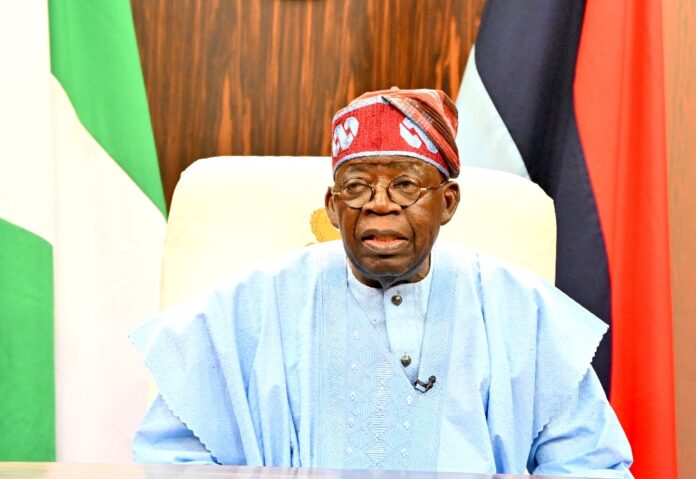
ABUJA — President Bola Ahmed Tinubu has officially signed the Electoral Act (Amendment) Bill 2026 into law, ending weeks of legislative suspense. Speaking at the State House on Wednesday, February 18, 2026, the President defended the decision to retain manual result collation as a primary fallback, citing Nigeria’s current technological limitations.
The President’s signature gives legal teeth to a series of reforms ahead of the 2027 polls, but it also solidifies the controversial Clause 60, which makes the electronic transmission of results optional rather than mandatory.
The “Broadband Reality” Check
Addressing concerns from the opposition and civil society groups who demanded a fully digital, real-time system, the President urged Nigerians to be “realistic” about the country’s infrastructure.
“Nigerians should question our broadband ability and how technical we will be tomorrow to answer the call of real-time transmission,” President Tinubu stated during the signing. “As long as you appear personally as a manual voter in any polling booth, that transmission of manual results is what we will look at. There will be no disenfranchisement of Nigerians.”
The President argued that insisting on a 100% electronic system in areas with poor internet connectivity would effectively strip millions of rural voters of their rights. He maintained that the hybrid system—combining the Bimodal Voter Accreditation System (BVAS) with manual result sheets—is the most “resilient” model for the nation.
Key Pillars of the New Law
- The Manual Safety Net: While INEC is encouraged to transmit results electronically to the IReV portal, the manual Form EC8A remains the legal “gold standard” for final collation in the event of a technical hitch.
- Notice of Election: The window for INEC to announce election dates has been adjusted to 180 days, providing the Commission with more flexibility for planning.
- Resignation of Appointees: Ministers, Commissioners, and other political appointees must now resign at least 90 days before any party primary they wish to contest.
- Early Voting: Security personnel and essential media workers can now cast their ballots up to two weeks before the general public.
“Legalising the Steal?” — Nigerians React with Fury
The President’s justification has done little to soothe the anger of critics who view the “manual fallback” as a deliberate loophole for electoral fraud.
- “Broadband is a Smokescreen”: “We have broadband for sports betting and online banking in the remotest parts of the North and South, but suddenly we don’t have it for votes?” queried a prominent Abuja-based tech analyst. “The President is using ‘technicality’ to protect a manual system that is easier to manipulate.”
- “Rubber Stamp Assembly”: Many Nigerians have blasted the 10th National Assembly for “handing the President exactly what he wanted.” The chants of “APC Ole!” that rocked the House of Representatives on Tuesday have trended nationwide as citizens accuse the government of “legislating for the next rig.”
- Trust Deficit: Civil society leaders, including Dr. Oby Ezekwesili, have warned that the new law will further deepen voter apathy. “Why should people queue if the final results can be changed manually in a dark room under the guise of ‘poor network’?” a spokesperson for #FixPolitics remarked.
The Road to 2027
With the legal framework now signed and sealed, the focus shifts to the Independent National Electoral Commission (INEC). The commission must now convince a skeptical public that the “optional” transmission clause will not be used to justify the “mysterious disappearances” of results seen in past cycles.
As the opposition “Mega Party” coalition prepares its first legal challenge to the Act, the 2026 Electoral law has officially set the stage for what promises to be Nigeria’s most litigious and contentious election cycle yet.