
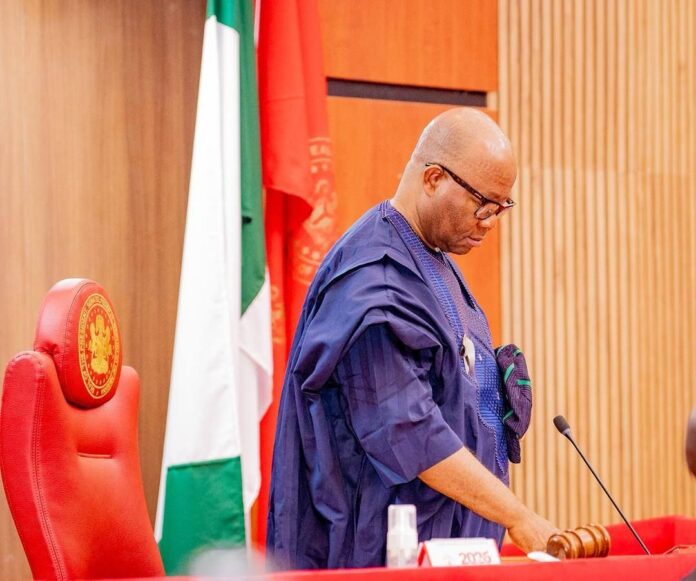

ABUJA — In a move that has sparked widespread condemnation across the federation, the Nigerian Senate on Tuesday, February 17, 2026, hurriedly passed the Electoral Act Amendment Bill during a high-tension emergency plenary.
While the primary “official” reason for the session was to adjust the 2027 election timetable to avoid a clash with the holy month of Ramadan, the real drama unfolded during the debate on Clause 60, which governs the electronic transmission of results.
The “Ramadan Shift”
The Senate successfully adjusted the mandatory “Notice of Election” period, effectively giving the Independent National Electoral Commission (INEC) the legal breathing room to move the 2027 Presidential and National Assembly elections. Originally set for February 20, the polls are now expected to be shifted to February 13, 2027, or earlier, to ensure millions of Muslim faithful are not forced to the polls while fasting.
The Electronic Transmission Row
However, the session turned “rowdy” when opposition lawmakers, led by Senator Enyinnaya Abaribe, pushed for a clause that would make the real-time electronic transmission of results from polling units mandatory and legally binding.
The proposal was flatly rejected by the APC-led majority. Instead, the Senate retained the controversial “discretionary” language, allowing INEC to decide when and how to transmit results—a move critics say leaves the door wide open for manual manipulation at collation centres.
“They Are Preparing to Rig”—Nigerians Blast Lawmakers
The news of the Senate’s decision has triggered an explosion of anger on social media and in the streets of Abuja. Many Nigerians have blasted the National Assembly for what they describe as a “calculated assault on democracy.”
- “Lack of Integrity”: “If they can’t even agree to transmit results electronically in 2026, then they are already preparing to rig 2027,” tweeted one popular activist. “We have the technology for banking and betting, but suddenly ‘network’ is an issue for our votes?”
- “The Ramadan Distraction”: Critics have accused the Senate of using the Ramadan calendar clash as a “smokescreen” to rush through a bill that protects incumbent interests. “They pretended to care about our religious fast just to sneak in a law that kills transparency,” noted a Lagos-based political analyst.
- “Voice of the Minority Ignored”: Nigerians expressed disappointment that the Senate President, Godswill Akpabio, allegedly “shouted down” opposition voices who demanded a formal division (a recorded vote) on the e-transmission clause.
What This Means for 2027
By refusing to make electronic transmission mandatory, the Senate has effectively returned the ultimate power of result verification to the manual “Collation Officers”—the very stage of the process where most electoral disputes in Nigeria originate.
The Bill now moves to a Joint Conference Committee to reconcile it with the House of Representatives’ version before being sent to President Bola Tinubu for his signature.
As the “emergency” session ended, the message from the Nigerian public was clear: the people wanted a digital revolution for their votes, but they were handed a manual relic instead.






