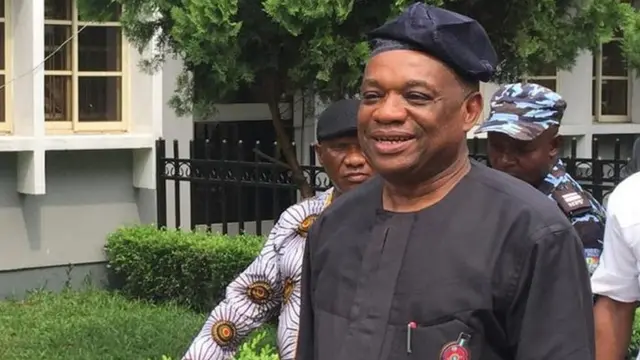
ABUJA — In a move to clear the air over his stance on electoral transparency, Senator Orji Uzor Kalu (Abia North) has dismissed a viral video portraying him as an opponent of electronic result transmission, declaring that the days of “no network” in his community are long gone.
Addressing the press following Tuesday’s heated plenary on the 2026 Electoral Act Amendment, Kalu clarified that the footage currently circulating on social media was a “relic” from six years ago. He insisted that personal intervention has since transformed the digital landscape of his hometown.
From “No Signal” to Full Bars
The former Abia State Governor explained that the infrastructure gap he famously lamented in the past has been filled through direct collaboration with telecommunications giants.
“After I complained that there was no network in my village 6 years ago, the Managing Director of MTN and the chairman of Globacom brought network masts and installed them in front of my house,” Kalu told reporters. “So, there is network coverage in my village now and there is no more excuse.”
Kalu used the anecdote to argue that if even remote villages like his can now boast of “full bars,” the Independent National Electoral Commission (INEC) should have no technical reason to avoid electronic transmission in the 2027 polls.
“Billionaire Privilege”—Nigerians Blast Kalu’s Logic
While the Senator intended to sound progressive, his comments have triggered a firestorm of criticism from Nigerians who view his “personal mast” solution as the height of elite disconnect.
The “mast in front of my house” narrative has become a lightning rod for public anger on social media:
- “What About the Rest of Us?”: “It’s typical of the Nigerian elite to solve their personal problems and think the national crisis is over,” tweeted one resident from Umuahia. “Does the network only work in his living room? What happens to the thousands of voters in the rural areas who don’t have the MD of MTN on speed dial?”
- “An Indictment of Failure”: Critics argued that Kalu, a two-term governor and long-serving senator, should be embarrassed that it took a “personal favor” to bring basic connectivity to his constituency. “It is a confession of failed leadership,” argued a political analyst in Abuja. “Public infrastructure should be a right for all citizens, not a gift given to a Senator by his billionaire friends.”
- The “Manual Loophole”: Despite Kalu’s assurance, many activists remain suspicious of the Senate’s refusal to make real-time transmission mandatory. “They tell us the network is fine now, but watch them claim ‘technical failure’ on election day to justify manual collation,” noted a civil society leader.
The Road to 2027
The Senate eventually passed the amendment, allowing for electronic transmission while retaining a manual “backup” system—a compromise that has left many reform advocates uneasy.
As the Bill moves to the Joint Conference Committee for final harmonization, the debate has shifted from whether technology exists to whether the political class has the genuine will to use it. For now, Senator Kalu’s village may have its masts, but many Nigerians fear the “network” of transparency is still very much offline.