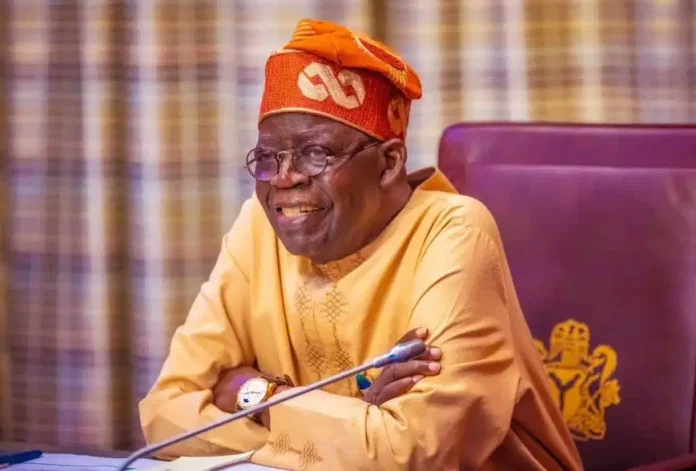

ABUJA, FCT – President Bola Tinubu has declared that the establishment of state police is no longer a matter of debate but a pending reality, vowing that the move to decentralise law enforcement will not be delayed.
Speaking at a high-level security and economic summit in Abuja on Monday, February 23, 2026, the President also gave an optimistic assessment of the nation’s fiscal health, asserting that Nigeria’s economy has finally “steered out of the woods” following years of turbulence.
The Push for State Policing
The President’s remarks come amidst heightened calls from the National Economic Council (NEC) and the 36 state governors for a more localised approach to tackling kidnapping, banditry, and insurgency. Tinubu emphasised that the constitutional amendments required to empower states to manage their own police forces are being fast-tracked.
“Establishing state police to fight insecurity will not be postponed,” Tinubu declared. “We are moving from the era of ‘consideration’ to the era of ‘execution.’ Our security architecture must reflect our federal structure to be effective.”
The move marks a significant shift in Nigeria’s security policy, which has been centrally controlled since the end of the first republic. The President noted that the federal government is working closely with the National Assembly to ensure the legal framework provides for strict oversight to prevent political misuse by state governors.
Economic Recovery: “Out of the Woods”
On the economic front, President Tinubu struck a triumphant tone, pointing to recent stabilisations in the Naira and an increase in foreign direct investment as proof that his “Renewed Hope” reforms are yielding results.
“The difficult decisions we took—from the removal of the petrol subsidy to the unification of the exchange rate—were bitter pills. But today, I can confidently tell Nigerians: we are out of the woods,” the President stated.
He cited the recent ₦2.8 trillion settlement of GenCo debts and the successful ₦4 trillion bond programme as evidence of the government’s improved liquidity and commitment to infrastructure. According to the President, the focus has now shifted from “crisis management” to “sustainable growth.”
Political Context and Reactions
The President’s optimism, however, faces a sceptical backdrop. While his supporters hail the economic rebound, critics point to the recent FCT Area Council elections as a sign of growing public disconnect.
The polls, held on Saturday, were marred by extreme voter apathy and allegations of high-level manipulation—most notably the “phantom votes” in AMAC highlighted by journalist Rufai Oseni, where one unit recorded 1,219 votes despite having only 213 accredited voters.
Furthermore, the ongoing detention of former Kaduna Governor Nasir El-Rufai by the ICPC, despite internal sources claiming a lack of evidence for theft, has led some to question if the “State Police” initiative might be used as a further tool for political containment.
The Road Ahead
As the federal government prepares to lay the State Police Bill before the National Assembly, the administration is also bracing for a series of town hall meetings to explain the economic recovery to a population still grappling with high food inflation.
The President concluded his address by urging Nigerians to remain patient, promising that the benefits of being “out of the woods” would soon reflect in the pockets of every citizen.