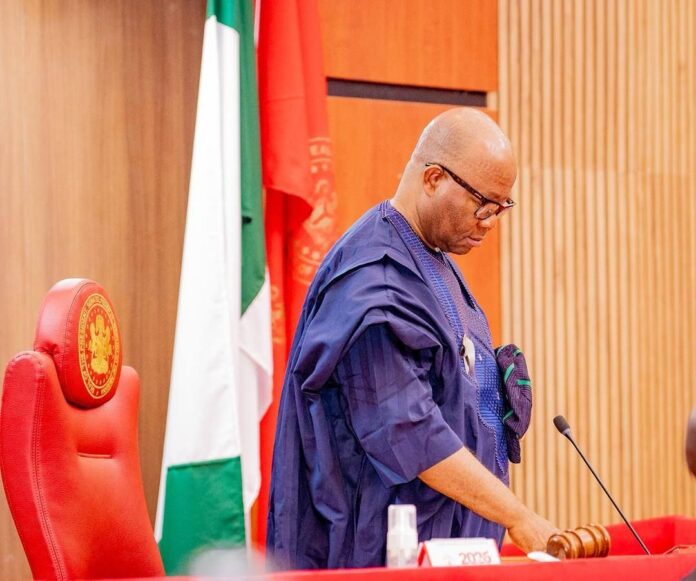
ABUJA — The hallowed chambers of the National Assembly were converted into a theatre of urgent legislative maneuvers today, Tuesday, February 17, 2026, as lawmakers convened an emergency plenary to consider a major shift in the 2027 General Election timetable.
The high-stakes session, which kicked off at 11:00 a.m., follows a massive outcry over the dates recently announced by the Independent National Electoral Commission (INEC), which critics say would force millions of Nigerians to vote while observing the holy month of Ramadan.
The Collision Course: Faith vs. Franchise
On Friday, February 13, 2026, INEC Chairman Prof. Joash Ojo Amupitan officially fixed the Presidential and National Assembly elections for February 20, 2027, with the Governorship polls following on March 6, 2027.
However, astronomical projections show that Ramadan is expected to begin in early February and run through early March 2027. This overlap has triggered a “red alert” among religious groups and political stakeholders, who argue that conducting a nationwide election during a period of fasting would be logistically nightmarish and physically draining for voters, security agents, and electoral staff alike.
The Options on the Table:
- The “Early Bird” Shift: Moving the Presidential election forward by one week to February 13, 2027.
- The January Alternative: A more radical proposal to push the entire electoral cycle to January 2027 to completely clear the fasting period.
- Legal Hurdles: Any adjustment at this stage would require a lightning-fast amendment to the Electoral Act or specific legal provisions governing election timelines.
“Tone Deaf”—Nigerians Blast INEC and Lawmakers
While the emergency plenary is underway, the mood across the country—and particularly on social media—is one of simmering anger. Many Nigerians have blasted both INEC and the National Assembly for what they describe as “clueless planning.”
- “Lack of Foresight”: “How can an entire commission with a research department not check the lunar calendar before making a national announcement?” queried a popular X (formerly Twitter) influencer. “It shows how disconnected they are from the reality of the people they serve.”
- “Political Distraction”: Some critics argue that the “emergency” is a manufactured drama to distract from more pressing issues like the N423bn Kaduna probe or the Benue displacement crisis. “They ignored the cries of the starving, but now they are running helter-skelter over a calendar they created themselves,” noted an Abuja-based lawyer.
- The Cost Factor: Civil society groups have raised concerns about the financial implications of shifting dates that have already been “baked into” the budgets of international observers and security agencies.
Wait and See
As of 3:00 p.m. today, the lawmakers were still locked in a heated debate. While the North-West and North-East caucuses are reportedly pushing hard for the January shift, some Southern lawmakers are wary of the shortened campaign window such a move would create.
For now, the February 20, 2027 date remains the official position of INEC, but with the “emergency” heat rising in Abuja, it appears almost certain that the 2027 calendar is about to be rewritten.