
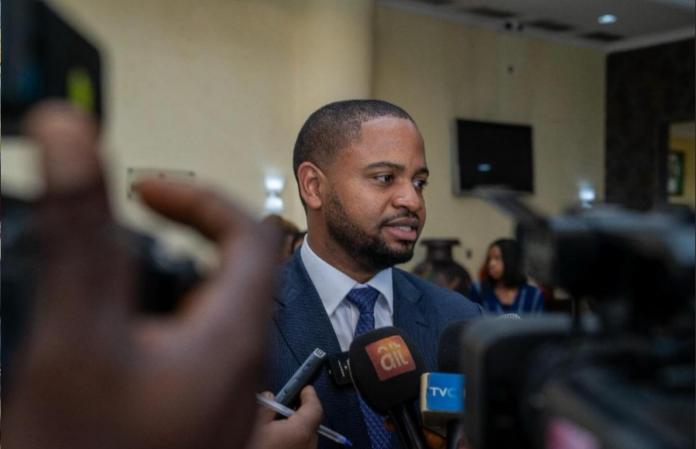

ABUJA, NIGERIA — The political atmosphere in the capital turned explosive this week as Senator Tony Nwoye (Anambra North) launched a scathing attack on Mark Okoye, the Managing Director of the South East Development Commission (SEDC). The confrontation, centered on a controversial 2026 budget proposal, has pulled back the curtain on the deepening frustration over the systemic marginalization of the South-East and the perceived complicity of its own representatives.
The “Seminar” Scandal
During a tense budget defense session, Senator Nwoye slammed Mark Okoye for presenting a ₦140 billion proposal that critics describe as “fluff.” Nwoye specifically targeted massive allocations for “advertisements,” “consultancy,” and “stakeholder seminars”—some reportedly carrying price tags in the millions—while the region’s physical infrastructure remains in a state of near-total collapse.
“Why would Mark Okoye be presenting nonsense as a South-East Development budget?” one constituent queried on social media, echoing Nwoye’s sentiment. “What are all these seminars for when the South-East is in dire need of infrastructure? Our representatives are simply sharing the ‘national cake’ while the people suffer.”
A Region Left in the Dark
The backlash against Okoye is rooted in a decades-long sense of marginalization. While other regions see federal investment in rail, power, and massive industrial hubs, the South-East continues to grapple with a litany of abandoned and decaying projects:
- The Second Niger Bridge Access Roads: While the bridge itself is largely complete, the critical 2A and 2B access roads remain unfinished, rendering the massive investment underutilised.
- Aba-Port Harcourt Expressway: A vital economic artery that has remained a “death trap” for years, stifling the commercial heartbeat of the Enyimba City.
- Enugu-Onitsha Expressway: Despite multiple “rehabilitation” contracts over the last decade, large sections remain impassable, forcing commuters onto dangerous detours.
- Gully Erosion Crisis: Over 1,000 active erosion sites, including the devastating Agulu-Nanka and Obosi gullies, receive only “feasibility studies” while communities are swallowed by the earth.
“Wolves” in the Hallowed Chambers?
Senator Nwoye’s rebellion marks a significant shift. For years, the narrative focused solely on the “Abuja government” neglecting the East. Now, the anger is turning inward. Constituents have labeled regional representatives like Okoye as “wolves” who facilitate the “menace and calamity” positioned against the Igbo heartland by prioritizing “image laundering” over schools and hospitals.
“We need to shift attention home and leave Abuja alone,” a viral post supporting Nwoye stated. “Our representatives in government are with our own share… we must come back home and hold them accountable.”
The National Disconnect
The SEDC row is just one piece of a fractured national puzzle. With Cardinal Onaiyekan and Buba Galadima questioning the legitimacy of the entire National Assembly, the South-East’s struggle for its “fair share” has become a flashpoint for the broader failure of Nigerian representation.
While the “Regency” in Abuja manages the President’s health and a $9 million U.S. lobbying fund, the South-East is demanding that its own leaders stop the “theatre of seminars” and start the work of rebuilding a marginalized region.






