
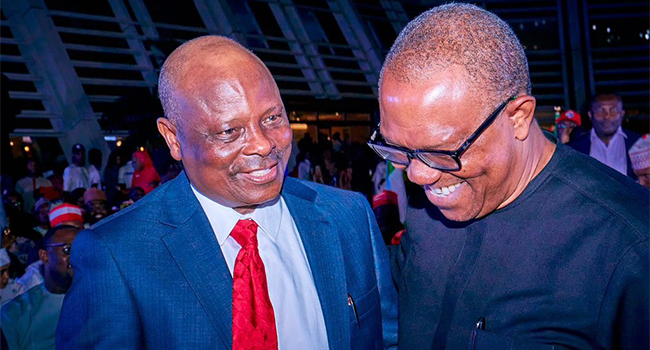

ABUJA — The proposed “super-merger” of Nigeria’s opposition parties faces a fresh deadlock as the leader of the New Nigeria People’s Party (NNPP), Senator Rabiu Musa Kwankwaso, has reportedly conditioned his entry into the African Democratic Congress (ADC) on the emergence of Peter Obi as the party’s presidential flagbearer for 2027.
Sources close to the Kwankwasiyya movement indicate that Kwankwaso is prepared to collapse his structures into the ADC only if the ticket is secured by the former Anambra State Governor. This development follows high-level mediation by former President Olusegun Obasanjo, who is reportedly driving the Obi-Kwankwaso pairing as the most viable alternative to the ruling APC.
Criticism of Atiku’s “Perpetual Ambition”
Kwankwaso’s insistence on a fresh face is being viewed as a strategic blockade against former Vice President Atiku Abubakar, who is also eyeing the ADC platform. Political analysts and insiders within the merger talks have grown increasingly critical of Atiku’s repeated and desperate quest to be president, arguing that his “perpetual ambition” has become a stumbling block to opposition unity.
“The consensus among the younger elements of the coalition is that the stage belongs to Obi and Kwankwaso,” a high-ranking ADC official noted. “Atiku has had multiple bites at the cherry since 1993; his insistence on being on the ballot in 2027 is seen by many as an ego-driven pursuit that ignores the national yearning for a generational shift.”
Critics further argue that Atiku’s inability to step aside and play the role of a “kingmaker” or elder statesman is fracturing the Peoples Democratic Party (PDP) and now threatens to destabilize the ADC before the merger is even formalized.
Obi Reaffirms “Number 1” Status
While Kwankwaso appears open to a joint ticket, Peter Obi has remained firm that he will only contest the 2027 election as the “Number 1” candidate. Speaking recently, Obi dismissed suggestions that he should accept a vice-presidential slot, asserting that his movement represents a fundamental break from the “old guard” politics represented by both the APC and Atiku’s wing of the opposition.
The African Democratic Congress now finds itself in a delicate balancing act, attempting to harmonize the demands of Kwankwaso’s massive Northern base with Obi’s national “Obidient” following, all while navigating the looming presence of Atiku Abubakar.