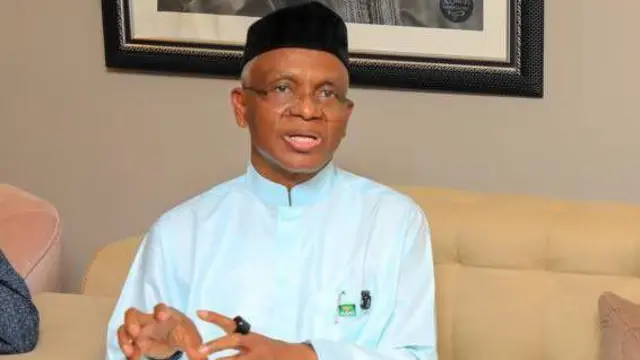
ABUJA, FCT – High-level sources within the Independent Corrupt Practices and Other Related Offences Commission (ICPC) have disclosed that investigators have failed to establish any concrete evidence of theft or financial misappropriation against former Kaduna State Governor, Malam Nasir El-Rufai.
Despite the high-profile nature of his recent detention, insiders reveal that the commission’s search for a “smoking gun” has yielded little, fueling claims that the move is a calculated political hit.
The “Paper-Thin” Case
The investigation, which stems from a Kaduna State House of Assembly report alleging the siphoning of ₦423 billion, has hit a significant roadblock. According to a senior operative within the anti-graft agency who spoke on the condition of anonymity, the case file remains “notoriously thin” regarding personal enrichment or direct theft by the former governor.
“We have combed through years of procurement documents and bank trails,” the source stated. “While there are procedural questions raised by the state assembly, we simply have no evidence of personal theft or embezzlement by El-Rufai. The narrative of ‘missing billions’ is not currently supported by the forensic facts on our desk.”
Allegations of Political Containment
The lack of incriminating evidence has shifted the national conversation toward the true motives behind the arrest. Legal associates of the former governor argue that the detention is a “fishing expedition” designed to sideline a powerful political figure ahead of the 2027 general elections.
“This is not a search for justice; it is a search for a reason to keep him out of the political space,” a member of El-Rufai’s legal team asserted. They pointed to the timing of the arrest—coming shortly after El-Rufai began voicing critiques of federal economic policies—as proof that the ICPC is being used as a tool for “political containment.”
The Kaduna Rift and “State Capture”
The friction between El-Rufai and his successor, Governor Uba Sani, is seen by many as the primary driver behind the petitions. Critics suggest that the Kaduna Assembly report was a “hatchet job” aimed at dismantling El-Rufai’s legacy.
Furthermore, observers have drawn parallels to what they call the “Lagos Model” of governance, where federal agencies are allegedly deployed to manage or neutralise former “kingmakers” who have fallen out of favour with the seat of power.
Pressure Mounts on the Commission
With no formal charges filed and the “no evidence” leak gaining traction, the ICPC finds itself in a precarious position. The agency is under increasing pressure to either produce a verifiable indictment or release the former governor on administrative bail to avoid further accusations of being a partisan instrument.
Constitutional lawyer Aliyu Mustapha noted: “An arrest without evidence is not a prosecution; it is an abduction under the guise of the law. If the ICPC cannot show the money trail, they are effectively validating the claim that this is a politically motivated exercise.”