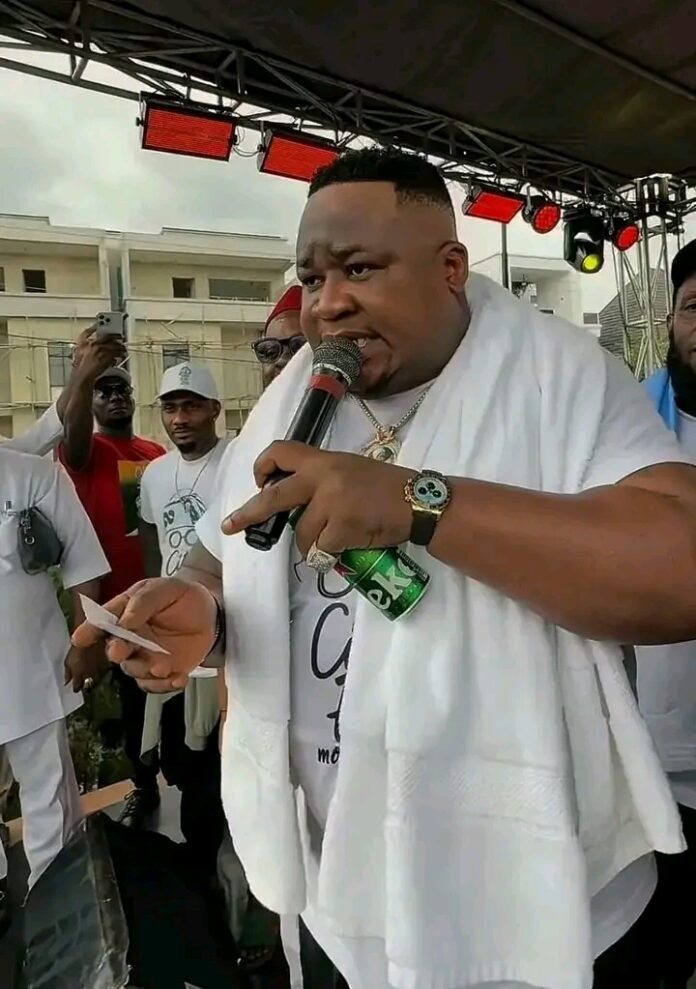
OWERRI – Popular socialite and hospitality mogul Pascal Okechukwu, widely known as Cubana Chiefpriest, has officially thrown his weight behind the ‘City Boy’ movement, citing strategic benefits and federal empowerment for the South East.
The celebrity barman made this declaration during a high-powered gathering in Imo State, where he addressed youth stakeholders on the need for the region to align with the center. Chiefpriest, known for his flamboyant lifestyle and massive social media following, emphasized that his political leanings are never accidental but are rooted in the long-term interests of his people.
“City Boy movement is all about empowerment,” the businessman stated. “You know I don’t go where I won’t benefit. I stand so firm with my friend Seyi Tinubu, and they have assured me that the South East will be taken care of.”
The endorsement is seen as a significant boost for the ‘City Boy’ brand—a political and social movement closely associated with the presidency—as it seeks to deepen its footprints in the South East. By leveraging his close personal ties with Seyi Tinubu, the President’s son, Chiefpriest is positioning himself as a vital link between the youth of the region and the federal government.
His remarks have sparked a flurry of reactions across the South East, with many viewing the move as a pragmatic approach to ensuring the region remains relevant in the national scheme of things. Critics, however, have pointed to the transactional nature of the statement, while supporters argue that “strategic alignment” is the only way to attract federal projects and youth-focused interventions to the area.
In recent months, the ‘City Boy’ movement has pivoted from a purely campaign-oriented group to one focused on entrepreneurship and vocational training. Chiefpriest’s involvement is expected to drive more grassroots participation, given his influence in the entertainment and lifestyle sectors.
As the political landscape continues to shift, the socialite’s public commitment serves as a reminder of the growing influence of non-traditional political actors in shaping regional narratives and federal partnerships.