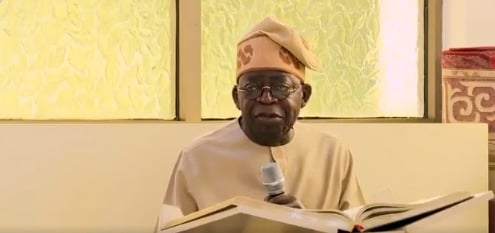
ABUJA — In a rare and striking display of public vulnerability, President Bola Ahmed Tinubu has reached out to the Nigerian people with a direct appeal for forgiveness, acknowledging the deep “pains and agitations” caused by his administration’s economic policies.
Speaking at the State House on Wednesday evening, February 18, 2026, as the nation prepares for the holy month of Ramadan, the President adopted a contrite and deeply personal tone. He moved away from the usual defensive rhetoric of the “Renewed Hope” agenda to ask for a “clean slate” from a populace currently battling the harshest cost-of-living crisis in decades.
An Unprecedented Apology
The President’s remarks were delivered during a gathering of religious and community leaders, where he reflected on the weight of leadership during a time of national economic “surgery.”
“As we approach this holy month of reflection, sacrifice, and prayer, I stand before you not just as your President, but as a human being who is capable of error,” Tinubu stated. “If I have sinned against you, or if our policies have caused you pain that you feel was unnecessary, I ask for your forgiveness. My heart has always been for a greater Nigeria, but I am not infallible.”
The President acknowledged that while the removal of fuel subsidies and the floating of the Naira were intended to “save a dying economy,” the recovery has been slower and more agonizing for the average family than initially projected.
“Apologies Don’t Fill Stomachs”—Nigerians Fire Back
While APC loyalists have praised the President for his “godly humility,” the broader public reaction has been one of sharp, unyielding skepticism. Across social media and in the markets of Lagos, Kano, and Onitsha, many Nigerians argued that true repentance from a government is seen in its budget, not its speeches.
- “The Luxury Disparity”: Critics were quick to contrast the President’s plea with the recent ₦66 billion expenditure on luxury SUVs for government officials. “The President is asking for forgiveness while his aides are buying new cars,” remarked one analyst in Abuja. “Repentance in leadership means cutting the cost of governance, not just making an emotional speech before Ramadan.”
- “2027 Pre-election Drama”: Many questioned the timing of the apology, coming just after he signed the controversial 2026 Electoral Act and as opposition figures like Nasir El-Rufai face intense legal heat. “Is he asking for forgiveness from the poor, or is he trying to soften the ground for 2027?” a resident in Kaduna queried.
- The Hunger Factor: In Northern Nigeria, where the Ramadan fast is a communal cornerstone, many expressed fear of the “triple-digit” inflation of food items. “We forgive him as a person, but we ask him to forgive our pockets too. Let the price of food come down so we can actually break the fast,” another citizen noted.
A Sober Holy Month
Despite the backlash, the President urged Nigerians to use the fasting period to pray for the country’s security and economic stability. He promised that the “next phase” of his administration would prioritize “direct relief” for the poorest households.
As the Ramadan-Election calendar clash continues to be a topic of national debate, Tinubu’s “Forgive Me” plea has set a somber tone for the coming weeks. For many Nigerians, however, the verdict on this apology will not depend on the sincerity of his words, but on the price of a bag of rice by the time the fast ends.