
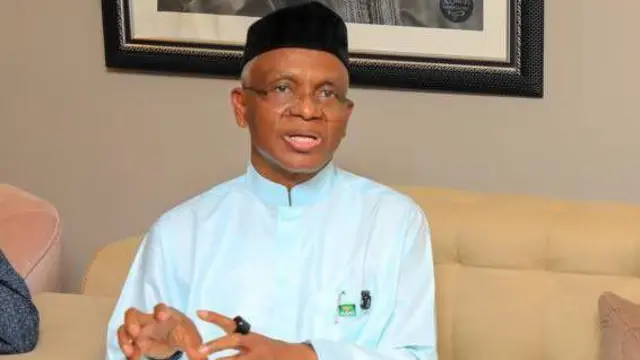

ABUJA — The highly anticipated arraignment of former Kaduna State Governor Nasir El-Rufai suffered a dramatic setback at the Federal High Court in Abuja today, after the defendant failed to appear in the dock.
El-Rufai was slated to face charges brought by the Department of State Services (DSS) involving the alleged illegal interception of phone calls belonging to the National Security Adviser (NSA). However, the legal proceedings hit a wall when the prosecution informed the court of El-Rufai’s current whereabouts.
Custody Conflict
The absence of the former governor sparked immediate confusion in the courtroom until government lawyers clarified the situation:
- The ICPC Factor: Prosecution counsel revealed that El-Rufai could not be produced because he is currently being held by the Independent Corrupt Practices and Other Related Offences Commission (ICPC) in connection with separate investigations.
- The Charges: The DSS case centers on “national security breaches,” specifically the high-level electronic surveillance and interception of the NSA’s private communications.
- The Delay: High Court Judge Justice [Name] expressed dissatisfaction with the lack of coordination between the agencies but ultimately adjourned the matter until April 23, 2026.
A Legal Tug-of-War
This development follows El-Rufai’s own ₦1.1 billion fundamental rights suit filed just days ago against the ICPC, where he accused the commission of a “Gestapo-style” invasion of his Abuja residence.
Legal analysts suggest that the “custody clash” between the DSS and ICPC highlights a complex web of investigations surrounding the former governor. While the DSS focuses on the alleged espionage and security breaches, the ICPC is reportedly digging into financial records from his eight-year tenure in Kaduna.
Rising Political Tensions
The stalled trial adds another layer of volatility to a week already marred by the assassination attempt on Peter Obi in Benin and the sudden resignation of IGP Kayode Egbetokun.
Supporters of the former governor have taken to social media, describing the overlapping detentions as “political persecution,” while government critics argue that no individual should be above the law, regardless of their status.
The court has ordered the relevant agencies to ensure the defendant is produced at the next adjourned date to allow the plea to be taken.






