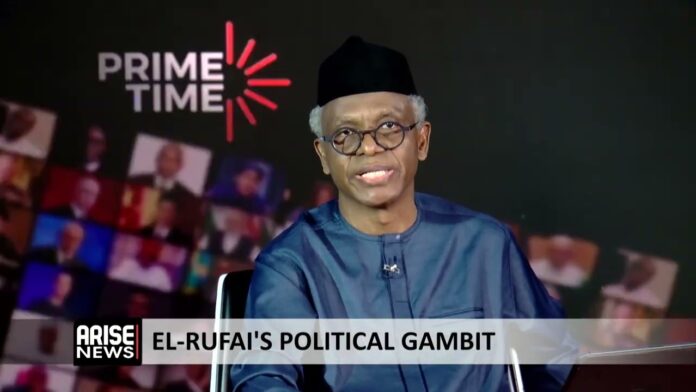
ABUJA – In a swift and dramatic turn of events on Wednesday night, operatives of the Department of State Services (DSS) took former Kaduna State Governor, Nasir el-Rufai, into custody immediately following his release from the Economic and Financial Crimes Commission (EFCC).
El-Rufai, who had spent two nights at the EFCC headquarters in Abuja, was reportedly picked up by the secret police at approximately 8:00 PM. Sources familiar with the matter indicated that while the EFCC had granted the former governor bail, DSS operatives were already stationed at the premises to effect his transfer to their facility.
The former governor’s stint at the anti-graft agency was marked by a refusal to cooperate with investigators. Insiders revealed that despite multiple attempts by EFCC officials to obtain a written statement regarding the alleged diversion of N423 billion in public funds, el-Rufai repeatedly declined to provide one.
While the EFCC’s probe focuses on financial crimes committed during his eight-year tenure, the DSS move is reportedly linked to a three-count charge involving cybercrime. The secret police are investigating allegations that el-Rufai was involved in the unlawful interception of telephone communications belonging to the National Security Adviser (NSA), Nuhu Ribadu.
The developments have sparked a wave of criticism across Nigeria, with many citizens expressing skepticism over the timing and nature of the investigations. On social media and in public circles, some have labelled the move “political persecution,” while others questioned why it took years to initiate such high-profile probes.
“This looks more like a settlement of old political scores than a genuine fight against corruption,” said Chidi Okechukwu, a Lagos-based political analyst. “When the DSS and EFCC start playing ‘tag’ with a suspect, it often suggests a lack of coordination or a hidden agenda.”
In Kaduna, supporters of the former governor described the arrest as an attempt to silence a vocal critic of the current administration. Conversely, anti-corruption activists have urged the agencies to ensure the process is transparent. “The N423 billion mentioned is public money. Nigerians deserve a trial, not a media circus,” posted a popular activist on X (formerly Twitter).
As of press time, neither the DSS nor the EFCC has issued an official statement regarding the specific conditions of his current detention.