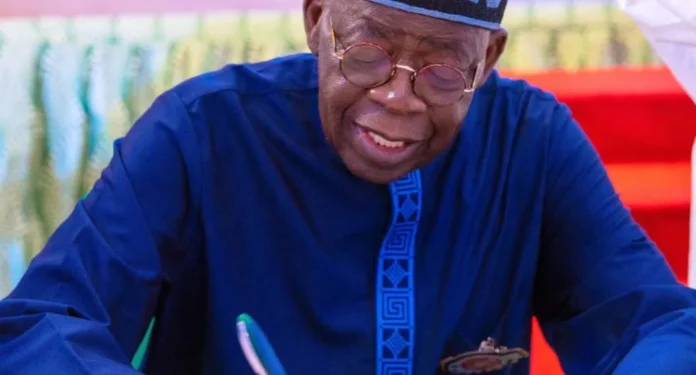
ABUJA — Social commentator Ife Salako has issued a provocative critique of the President Bola Tinubu administration, alleging that the President’s historical legal challenges in the United States have compromised his moral authority.
In a statement that has sparked widespread debate across digital platforms, Salako suggested that the President’s past involvement in a narcotics-related civil forfeiture case continues to impact his current governance style.
Allegations of a “Loss of Conscience”
Salako’s remarks specifically reference a 1993 legal matter in the Northern District of Illinois, where $460,000 was forfeited from accounts linked to the President following a US federal investigation into a heroin trafficking syndicate.
“It is a clear fact that Tinubu got involved in drug dealings and at the moment where he decided to take those monies into his custody, he has lost his conscience,” Salako stated.
The commentator argued that the President’s current policy directions, which critics often describe as “disconnected” from the economic hardships facing Nigerians, are a symptom of a long-standing “loss of conscience” rooted in those decades-old events.
A Controversial Legacy Revisited
The 1993 forfeiture has remained a central point of contention for opposition figures. While the President’s legal team has consistently maintained that the forfeiture was a civil settlement and not a criminal conviction, critics like Salako use the incident to challenge the ethical foundations of the “Renewed Hope” agenda.
- The Forfeiture: The US government alleged the funds were proceeds of narcotics trafficking, leading to the seizure of the assets.
- The Presidency’s Stance: Supporters frequently point out that the President was never formally charged or convicted of a crime, and the matter was legally resolved over thirty years ago.
- The Moral Argument: Salako, however, contends that the association with such activities remains a valid metric for judging a leader’s “clean conscience” in public service.
Public and Political Impact
Salako’s comments arrive at a time of significant economic tension in Nigeria, where the President’s personal history is frequently weighed against his administration’s performance. While pro-government groups have dismissed Salako’s assertions as “recycled political attacks,” the statement has resonated with those who remain skeptical of the President’s past.
The Presidency has historically declined to engage with individual critics on this specific subject, relying on the Supreme Court’s validation of the 2023 election results to solidify his mandate. Nevertheless, Salako’s viral quote has reignited the national conversation regarding the role of “conscience and integrity” in high office.