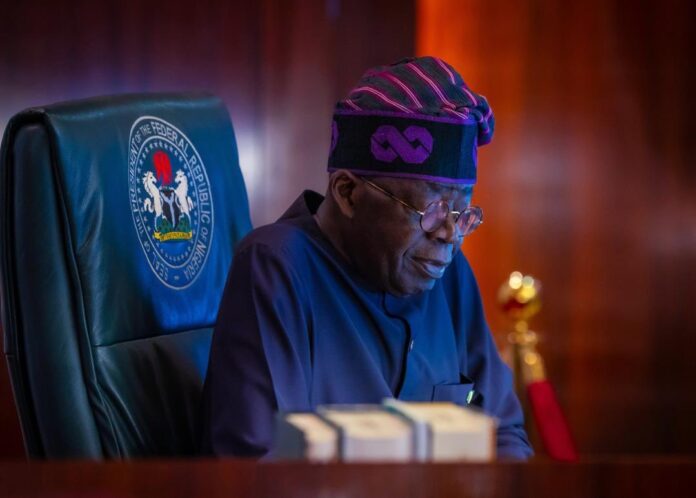
ABUJA — A fierce national debate has erupted over the fiscal trajectory of the President Bola Ahmed Tinubu-led administration, as new data suggests the government’s borrowing has outpaced the combined debt of the Obasanjo, Yar’Adua, Jonathan, and Buhari eras.
Critics and economic watchers are now asking a chilling question: Is this massive influx of credit intended for economic recovery, or is it facilitating the “Almajirization” of Nigeria—a state where the middle class is liquidated into a dependent poor while the political elite prepares a “war chest” for the 2027 general elections?
The Debt Explosion: Reform or Ruin?
According to the Debt Management Office (DMO), Nigeria’s public debt has soared to ₦121.67 trillion. While the Presidency attributes much of this to the devaluation of the Naira and the need for critical World Bank-funded reforms, activists warn that the “middle class time is almost up.”
The disparity between the government’s borrowing and the average citizen’s reality was recently highlighted by a viral video of a young lady lamenting that pepper, onions, and oil for a single meal now cost ₦2,500.
Influence for Sale?
There are growing allegations that the administration is widening the class bracket to ensure that only the “buyable” remain influential. Skeptics point to the optics of Senator Adams Oshiomhole’s private jet luxury as proof that the ruling class is shielded from the “too much suffering” decried by Pastor Folu Adeboye, wife of Enoch Adeboye.
“This is the year they will use borrowed money to buy your favorite idols, politicians, and skit makers,” warned one widely circulated manifesto, suggesting that the 2027 “Patriotic Assignment” is being funded by the nation’s future.
The Moral and Legal Crossroad
The government’s focus on borrowing is also being questioned in light of its failure to recover “stolen” funds from the past. Former Minister Solomon Dalung recently asked why the state is prosecuting Abubakar Malami for shielding terror sponsors while the actual financiers—who hold the keys to national productivity—remain at large.
As the middle class vanishes into the “Almajiri” bracket, the call to “fight with your voice” has moved from a suggestion to a survival strategy.
–
Since the removal of the petrol subsidy in May 2023, Nigeria’s total public debt has surged from ₦87.38 trillion to ₦152.4 trillion as of June 2025. This represents an addition of over ₦65 trillion to the national debt profile in approximately two years. While the government has saved approximately ₦10.8 trillion ($7.5 billion) annually from the subsidy removal, these gains have been largely absorbed by the rising costs of debt servicing, which are projected to reach ₦15.52 trillion in the 2026 budget.
The Debt Explosion: New Loans vs. Currency Devaluation
The dramatic increase in Naira terms is driven by a combination of aggressive new borrowing and the massive devaluation of the currency:
- Currency Impact: The depreciation of the Naira from approximately ₦460/$1 in June 2023 to over ₦1,500/$1 by mid-2024 automatically inflated the Naira value of existing dollar-denominated external debts by trillions.
- New External Borrowing: Since taking office, the administration has secured approximately $7.2 billion in new external loans, primarily from the World Bank, for projects ranging from power sector recovery to social safety nets.
- Domestic Securitisation: A significant portion of the increase stemmed from the securitisation of ₦22.7 trillion in “Ways and Means” advances from the Central Bank, which were officially moved into the public debt stock to enhance transparency.
Vanishing Middle Class: The ‘Almajirization’ Risk
The fiscal strategy of “borrowing to reform” has triggered what activists call the “Almajirization” of the Nigerian populace—a systematic erasure of the middle class:
- Purchasing Power Collapse: With inflation reaching 34.6% by mid-2025, the disposable income of families has been decimated. A single meal’s ingredients (oil, onions, pepper) now cost upwards of ₦2,500, up from just a few hundred Naira previously.
- SME Decline: Small and medium enterprises, the backbone of the middle class, report that the removal of the fuel subsidy has doubled operating costs and squeezed profit margins, forcing many to shut down or downsize.
- Debt Servicing Over Welfare: In the proposed 2026 budget, debt servicing (₦15.52 trillion) is set to consume more than the combined allocations for education, health, security, and defence.
The 2026 Outlook
By the end of 2026, Nigeria’s debt-to-GDP ratio is projected to rise to 34.68%. While the Central Bank of Nigeria (CBN) expects this trajectory to remain “sustainable” due to projected exchange rate stability, critics argue that the burden of servicing this debt has already bankrupted the government’s ability to provide essential social services. The administration continues to seek new credit, including a proposed $21.5 billion external borrowing plan for 2025–2026, to fund the ongoing budget deficit.