
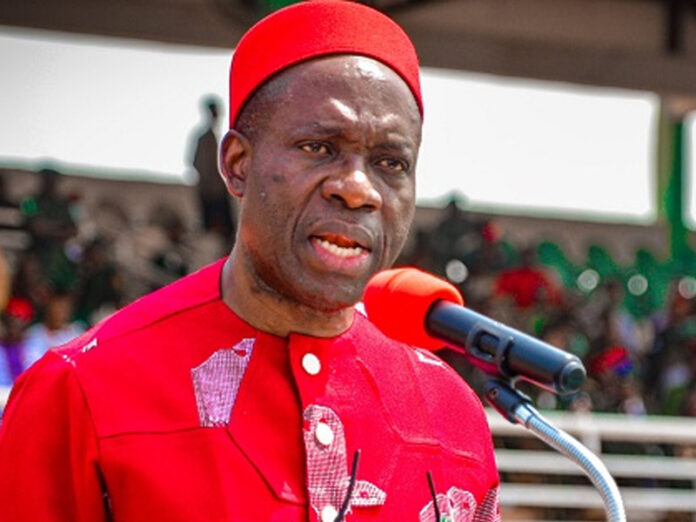

ONITSHA – High-stakes legal warfare has erupted in Anambra State as human rights lawyer Ogbonnaya Obasi dragged the State Government and the Nigeria Police Force to court, demanding ₦2 billion in damages over the controversial closure of the Onitsha Main Market.
The lawsuit challenges the “executive order” issued by Governor Chukwuma Soludo on January 26, 2026, which shuttered the commercial hub for one week as a punitive measure against traders observing the Monday “sit-at-home” mandate.
Obasi is seeking exemplary and aggravated damages, arguing that the shutdown constitutes a gross violation of the traders’ fundamental rights to property, movement, and dignity. The lawyer characterised the government’s action as “executive recklessness,” asserting that the state cannot legally punish citizens for the insecurity it has failed to contain. He noted that the market and private shops are people’s private property and should not be subject to arbitrary state closure.
The suit also names the Commissioner of Police and the Inspector General of Police as defendants. Obasi alleges that the heavy deployment of security operatives to enforce the closure has turned a commercial district into a zone of intimidation. Notably, Obasi has a history of successful litigation against the force, having previously won a ₦25 million judgement for rights abuses in Onitsha.
The ₦2 billion suit is part of a growing judicial siege against the Soludo administration. Civil rights groups, including the Committee for the Defence of Human Rights (CDHR), have condemned the closure as an unconstitutional assault on economic freedom, while aggrieved traders from the Udoka Line section have filed a separate ₦5 billion suit.
Meanwhile, activists have publicly urged traders to sue for billions, insisting that business operations cannot be mandated under state compulsion.
While the Anambra State Government justifies the closure as a necessary step to break a cycle that costs the state ₦8 billion weekly, the legal community is increasingly questioning the constitutionality of using collective punishment as an economic tool.
Will the court grant an urgent injunction to prevent future market closures, or will the state’s security argument hold sway in the temple of justice?






