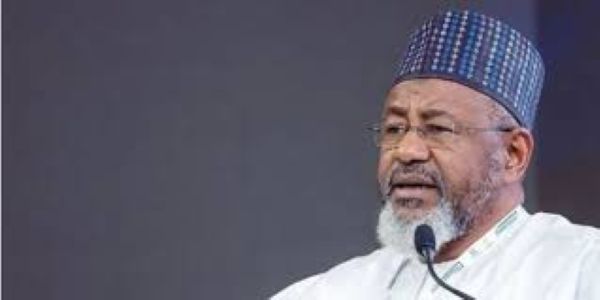
ABUJA – A religious storm is brewing over Nigeria’s electoral future as the Supreme Council for Shari’ah in Nigeria (SCSN) declared on Tuesday that the Muslim community will not recognise the 2027 general elections if they are conducted under the current Christian INEC Chairman, Professor Joash Amupitan.
In a blistering address during the Council’s 2026 Annual Pre-Ramadan Lecture in Abuja, SCSN President Sheikh Bashir Umar branded Amupitan a “threat to the credibility” of the nation’s democracy. The Council is demanding his immediate removal and prosecution, citing what they describe as “grave integrity and neutrality concerns” that render him unfit to lead the electoral umpire.
The crux of the Council’s fury lies in an alleged legal brief authored by Amupitan, which reportedly suggests the existence of a “Christian genocide” in Nigeria—a narrative the Shari’ah Council dismisses as “divisive propaganda” designed to malign the Muslim community. Sheikh Umar argued that an official who purportedly holds such “biased” views cannot be trusted to act as an impartial arbiter in a high-stakes national election.
“Muslims will neither recognise nor legitimise any election conducted under his leadership,” Umar stated, warning that the legitimacy of the 2027 polls is at stake.
However, the Northern Christian Association of Nigeria (Northern CAN) has fired back, describing the Council’s ultimatum as a “dangerous attempt to politicise religion.” Northern CAN Chairman Rev. Joseph John Hayab insisted that Amupitan’s appointment was a landmark for inclusivity and urged President Bola Tinubu not to bow to “religious blackmail.”
Professor Amupitan, a legal luminary and Senior Advocate of Nigeria (SAN), was sworn in on October 23, 2025, with a mandate from the Presidency to serve with “integrity beyond reproach.” This latest outcry marks the first major religious challenge to his leadership, threatening to polarize the country’s electoral landscape along faith lines years before the first ballot is cast.
The Presidency has yet to issue an official response to the Council’s boycott threat, even as tensions continue to simmer among religious and political stakeholders.
Will the Federal Government address these specific allegations to maintain public confidence in the electoral commission, or will the 2027 polls remain under a cloud of religious friction?