
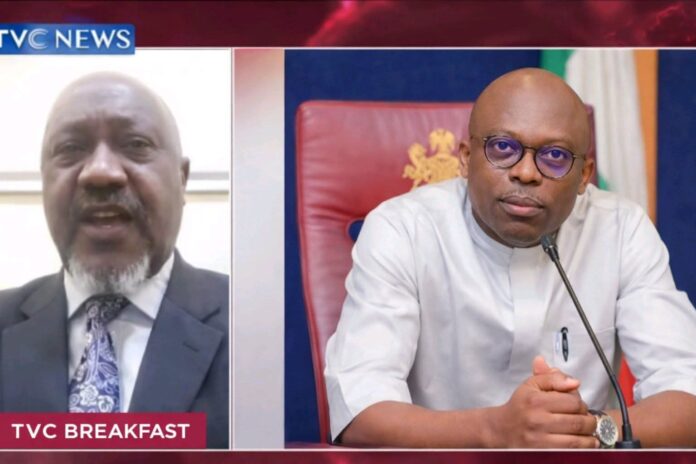

Analyzing the dramatic realignments in the oil-rich state, Nzeako noted that the Governor’s decision to join the All Progressives Congress (APC) in December 2025 has fundamentally altered the conflict’s geometry. By entering the same political family as his predecessor, Fubara has neutralized the external tools once used to destabilize his administration.
“He has joined the party that was used to torment him,” Nzeako observed. “Now, the party itself is clashing with his tormentor-in-chief.”
The analyst explained that this shift has created a profound crisis of loyalty for the state’s political actors. Members of the Rivers State House of Assembly and other party stalwarts, who previously attacked Fubara from a partisan standpoint, now find themselves in the awkward position of opposing a fellow party member. This “internal warfare” has unsettled the state’s political structure, leaving Wike’s loyalists increasingly isolated from the party’s central leadership in Abuja.
Nzeako warned, however, that while the defection has weakened external pressure on the Governor, it has not provided a total resolution. Instead, the rivalry between Fubara and Wike has become a localized struggle for control of the APC’s state machinery. He stressed that until this personal power contest is resolved, Rivers State remains at risk of prolonged governance disruptions.
The analyst concluded by urging the nation’s political leadership to prioritize institutional stability over individual ego. Given Rivers State’s critical role in Nigeria’s economy, Nzeako maintained that the state requires a functioning, focused government rather than a continuous cycle of elite confrontation that threatens to stall regional development ahead of the 2027 general elections.





