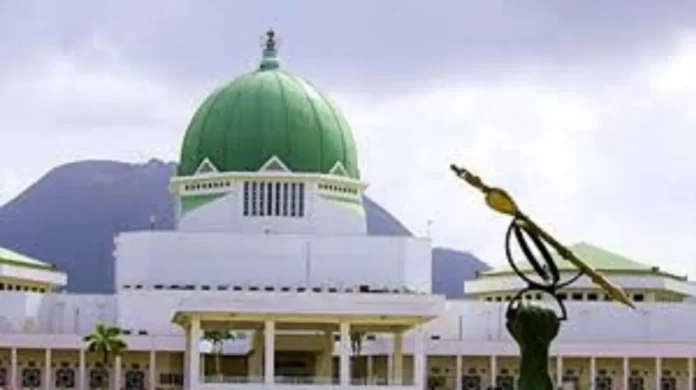
ABUJA – The Nigerian Senate has intensified its standoff with the Nigerian National Petroleum Company Limited (NNPCL), officially rejecting the oil giant’s written defence regarding ₦210 trillion in unaccounted funds. In a decisive session, the Senate Committee on Public Accounts, chaired by Senator Aliyu Wadada, ordered the company to immediately refund the “unjustifiable” sum to the national treasury, describing the current management’s explanations as “offensively evasive”.
.
The ₦210 trillion discrepancy, spanning audited statements from 2017 to 2023, is split into ₦103 trillion in “accrued expenses” and ₦107 trillion in “receivables”. The Senate panel questioned how NNPCL could claim to have paid ₦103 trillion in cash calls in a single year when its total revenue over five years was just ₦24 trillion. Furthermore, the committee dismissed claims that ₦107 trillion was held in “defunct banks” because the company failed to name the institutions or provide documentation.
The ₦210 trillion discrepancy, spanning audited statements from 2017 to 2023, is split into ₦103 trillion in “accrued expenses” and ₦107 trillion in “receivables”. The Senate panel questioned how NNPCL could claim to have paid ₦103 trillion in cash calls in a single year when its total revenue over five years was just ₦24 trillion. Furthermore, the committee dismissed claims that ₦107 trillion was held in “defunct banks” because the company failed to name the institutions or provide documentation.
.
Constitutional Crisis Over the ₦8trn Write-Off
This legislative probe has gained new urgency following President Bola Tinubu’s executive directive to “nil off” approximately ₦8 trillion ($1.42 billion and ₦5.57 trillion) in separate NNPCL legacy debts. Opposition parties and legal experts have characterized the move as an “unconstitutional exercise of power”.
- Breach of Section 162: The African Democratic Congress (ADC) asserted that the President lacks the unilateral power to cancel debts belonging to the Federation Account. They argue that under Section 162 of the 1999 Constitution, these funds must be shared among federal, state, and local governments, making the write-off an “impeachable offence” carried out without National Assembly approval.
- Fiscal Double Standards: Former presidential candidate Peter Obi condemned the move as “financially reckless,” noting that while the government imposes “unfair taxes” on citizens, it is forgiving debts for a corporation that recently claimed to be profit-driven. He pointed out that the ₦8 trillion forgiven is higher than the combined 2025 federal budgets for health, education, and agriculture.
The ‘Shadow’ Stakeholder Committee
The presidency’s justification for the write-off rests on the recommendations of a “Stakeholder Alignment Committee”. However, critics have questioned the legitimacy of this body, noting its composition remains “mysterious” and its decisions bypass the constitutionally mandated Federation Account Allocation Committee (FAAC) processes.
As of Tuesday, January 27, 2026, the Senate has issued a final summons to NNPCL Group Chief Executive Bayo Ojulari, warning that future absences will no longer be tolerated. With the ₦210 trillion audit mess unresolved, the executive decision to erase ₦8 trillion in liabilities has left the nation’s oil governance under its most intense scrutiny in decades.