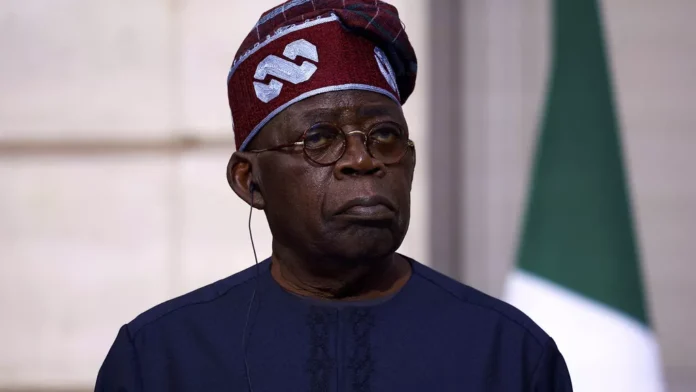
ABUJA — The administration of President Bola Tinubu has ignited a fresh wave of public and legislative fury following the executive approval to “nil off” approximately ₦8 trillion (comprising $1.42 billion and ₦5.57 trillion) in legacy debts owed by the Nigerian National Petroleum Company Limited (NNPCL) to the Federation Account.
The controversial write-off, revealed in late December 2025 and finalized through the Nigerian Upstream Petroleum Regulatory Commission (NUPRC), comes even as the Senate continues its high-stakes investigation into an unproven ₦210 trillion financial discrepancy found in the company’s audited statements between 2017 and 2023.
The ₦210 Trillion Audit Standoff
The Senate Committee on Public Accounts, led by Senator Aliyu Wadada, has formally rejected NNPCL’s written explanations for 19 audit queries covering ₦103 trillion in accrued expenses and ₦107 trillion in receivables.
- Senate Rejection: Lawmakers described the oil firm’s figures as “economically impossible” and “unjustifiable,” questioning how NNPCL could claim ₦103 trillion in joint venture cash calls for 2023 alone when its total generated revenue over five years (2017–2022) was only ₦24 trillion.
- “Evasive” Management: The committee has threatened to subpoena former Group Managing Directors (GMDs) and top officials after the current GCEO, Bayo Ojulari, failed to appear in person to defend the audit queries.
Constitutional and Fiscal Backlash
The African Democratic Congress (ADC) and former presidential candidate Peter Obi have spearheaded the condemnation, labeling the ₦8 trillion write-off “unconstitutional” and a violation of Section 162 of the 1999 Constitution.
Bypassing the Legislature: Critics argue that 96% of the dollar-denominated liabilities and 88% of the naira balances were wiped away by executive directive without National Assembly authorization, depriving states and local governments of vital revenue.
“Normalizing Recklessness”: Peter Obi described the move as “financially reckless,” noting that the ₦210 trillion being scrutinized exceeds the combined federal budgets of Nigeria from 2023 to 2026.
Economic Despair Amid Impunity
The news has left many Nigerians feeling “bereaved,” as the humongous funds reportedly unaccounted for are contrasted with the government’s continued borrowing and the removal of critical subsidies. While the Presidency and a “Stakeholder Alignment Committee” defend the write-off as a necessary “netting off” of netting debts to clean up NNPCL’s balance sheet, transparency advocates warn that “writing off legacy debts” without accountability is a dangerous precedent.
As of Tuesday, January 27, 2026, the National Assembly remains under pressure to escalate its probe into the missing trillions, as the public demands to know why nearly $1.5 billion in obligations were erased while the nation remains in fiscal distress.