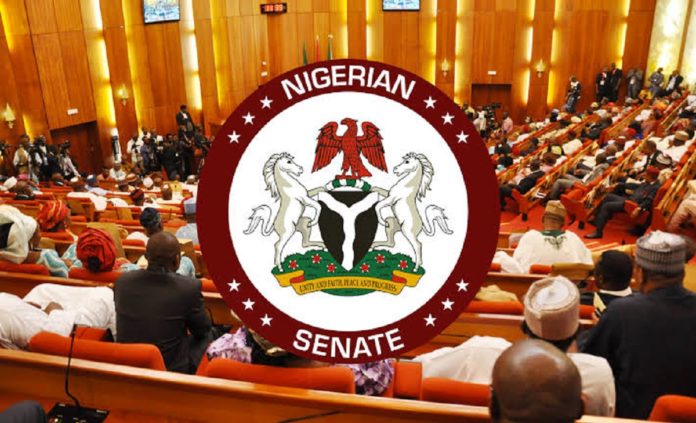
ABUJA — The Senate Committee on Public Accounts has released a granular breakdown of the 19 audit queries that form the basis of the ₦210 trillion financial scandal currently rocking the Nigerian National Petroleum Company Limited (NNPCL). The details, described by legislative investigators as “mathematical fiction,” reveal a pattern of unvouched expenses and ghost receivables that have reportedly been submitted to President Bola Tinubu without subsequent prosecution.
The Breakdown: Accrued Expenses and Shadow Cash Calls
The bulk of the discrepancy lies in ₦103 trillion classified as “accrued expenses” for the 2023 financial year. The Senate panel found that the NNPCL claimed these funds were used for “Joint Venture (JV) Cash Calls” and “security for petroleum assets.”
However, investigators pointed out a glaring fiscal impossibility: the total reported revenue of the NNPCL over the preceding five years (2017–2022) was only ₦24 trillion.
Lawmakers have demanded to know how the company could incur expenses in a single year that are nearly five times its total five-year revenue. The Senate Committee noted that there were no supporting vouchers, bank statements, or board approvals to validate the outflow of these trillions.
The ₦107 Trillion ‘Ghost’ Receivables
The second half of the scandal involves ₦107 trillion in “unaccounted receivables.” The NNPCL’s written defense to the National Assembly claimed these funds were trapped in “defunct and distressed banks.”
When pressed for specifics, the company failed to provide the names of the banks, the dates of the deposits, or any evidence of efforts to recover the funds. The Senate described this explanation as “offensively evasive,” noting that the sum of ₦107 trillion is larger than the total liquidity of the entire Nigerian banking sector.
The Executive Write-Off: Impunity or Strategy?
Despite the External Auditor’s Report being in the hands of the President, the administration has opted to “nil off” a separate ₦8 trillion in legacy debts. This move has been characterized by opposition figures as a “smokescreen” to prevent a deeper dive into the ₦210 trillion audit mess.
“This is how a nation’s future is buried in broad daylight,” one committee member remarked, lamenting that while Nigerians are “bereaved” by the removal of subsidies and rising poverty, the government is simply writing off trillions in questionable corporate liabilities.
As of Tuesday, January 27, 2026, the Senate has given the NNPCL management a final 48-hour ultimatum to provide a name-by-name list of the “defunct banks” and the original vouchers for the ₦103 trillion expenses. Failure to comply will reportedly trigger a formal motion for a Judicial Commission of Inquiry into the firm’s books.